By Joshua Uti
ASUU declines FG proposal,commence two weeks warning strike today
The Academic Staff Union of Universities (ASUU) will today, Monday, commence a two-week warning strike following the expiration of its ultimatum to the Federal Government on Sunday.
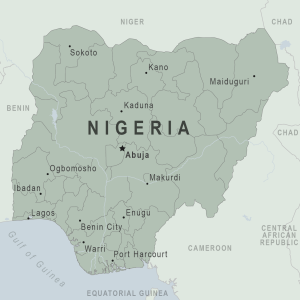
The National President of the union, Professor Chris Piwuna, announced the industrial action at a press briefing held at the University of Abuja on Sunday,the renewed standoff between ASUU and the government comes despite ongoing negotiations intended to prevent further disruptions in the country’s public universities.
Last Wednesday, the Minister of Education, Dr Tunji Alausa, stated in Abuja that the government had reached the final stage of talks with ASUU and other unions to address unresolved issues concerning welfare, funding, and the implementation of the 2009 ASUU-FGN Agreement. Alausa explained that the Tinubu administration had made progress, including the release of ₦50 billion for the payment of Earned Academic Allowances and the inclusion of ₦150 billion in the 2025 budget for needs assessment, to be released in three tranches,declaring the strike, Professor Piwuna said, “Compatriots of the press, it goes without saying that there is nothing sufficient on the ground to stop the implementation of the ASUU-NEC’s resolution to embark on a two-week warning strike at the expiry of the 14-day notice given on 28 September 2025, all branches of ASUU are hereby directed to withdraw their services with effect from midnight on Monday, 13 October 2025. The warning strike shall be total and comprehensive as agreed at the last NEC meeting.”

It was learnt that the Federal Government had invited the union to a meeting last Friday in an attempt to avert the action. During the meeting, the government presented a proposal, but ASUU rejected it, insisting it did not address its key demands. ASUU is calling for the conclusion of the renegotiated 2009 FGN-ASUU agreement, the release of withheld salaries for three and a half months, sustainable funding for public universities, revitalisation of institutions, and an end to the alleged victimisation of lecturers at Lagos State University, Kogi State University (now Prince Abubakar Audu University), and the Federal University of Technology, Owerri.
The union is also demanding payment of outstanding 25–35 per cent salary arrears, settlement of promotion arrears spanning more than four years, and the release of withheld third-party deductions.A source in the Ministry of Education disclosed that the minister had tried to reach ASUU’s leadership by phone but his calls were ignored. “The minister made efforts to reach out to the leadership of the union, but they refused to pick up calls. A proposal was made, but they went ahead with the strike,” the source said.
Professor Piwuna confirmed that the government’s offer was rejected. “The presentation to ASUU was a total departure from the letter and spirit of the review of the draft agreement submitted by the Yayale Ahmed committee to the ministry,” he said, that the union would submit its own position to the government, highlighting areas of distortion and inconsistency. “The hurriedly packaged documents were provocative and incapable of dousing industrial tensions which had reached an irreversible pitch across our campuses,” he stated.
According to him, the Federal Government had earlier raised the union’s hopes by asking for three weeks of grace to address the issues before ASUU’s August 2025 NEC meeting at Usmanu Danfodio University, Sokoto. “The pre-UDUS NEC hope was dashed without a blink,” he said.
ASUU has a long history of industrial action over issues such as unpaid salaries, promotion arrears, poor funding, decaying infrastructure, inadequate research facilities, unfulfilled agreements, and poor working conditions. Meanwhile, the Federal Government on Sunday night threatened to enforce the “no work, no pay” policy in response to ASUU’s strike declaration. In a joint statement, the Minister of Education, Dr Alausa, and the Minister of State for Education, Professor Suwaiba Ahmad, urged the union to reconsider its decision, stressing that dialogue remains the most effective and sustainable way to resolve disputes.

The ministry, through its spokesperson Folasade Boriowo, said the government had made a comprehensive offer addressing working conditions, governance, and staff welfare, accusing ASUU of being uncooperative despite efforts to avert the strike.
The statement reaffirmed the government’s commitment to maintaining industrial harmony in the tertiary education system, noting that the “no work, no pay” policy remains in effect.
It also assured students, parents, and the public that the government remains open to engagement and determined to uphold accountability in the use of public funds.
In reaction, the National Association of Nigerian Students (NANS) urged the government to demonstrate sincerity and urgency in addressing the issues.
Speaking to *The PUNCH* in Abuja, NANS Assistant General Secretary, Adejuwon Emmanuel, said the association had been monitoring the situation closely. “We are aware that the University of Jos chapter of ASUU recently met with the management of the institution and student leaders to explain their grievances, which include unresolved matters relating to welfare, funding, and government obligations,” he said.
Adejuwon disclosed that NANS President, Olushola Oladoja, had commenced mediation efforts between the union and the government. “Nigerian students have endured too many disruptions, and another strike will only worsen their hardship,” he added. While acknowledging ASUU’s concerns, NANS appealed for other forms of engagement that would not destabilise the academic calendar. In a related development, the Academic Staff Union of Polytechnics (ASUP) has given the Federal Government a six-week deadline to address its demands.
The union explained that it suspended its proposed strike because the Minister of Education had shown commitment to resolving some of its issues.
ASUP had issued a 21-day ultimatum on 15 August 2025, but at its 115th NEC meeting on 9 October, it noted progress, including the release of a circular by the National Salaries, Incomes and Wages Commission on Peculiar Academic Allowance, and advances on the 2025 NEEDS Assessment intervention for polytechnics.
It also acknowledged the resumption of meetings of the Polytechnics Implementation Monitoring Committee, preparations for monitoring and evaluation of the 2025 assessment cycle, the reconstitution of the Federal Government Renegotiation Committee, and steps taken by the Federal Ministry of Education to address concerns in some polytechnics.