by Mercy Emmanuel
The Human Cost of Data: Nigeria’s N57bn Security Spend Fails to Buy Safety
ABUJA – To the accountants tracking Nigeria’s Open Treasury Portal, the figure is precise N57.78 billion. That is the amount the Federal Government disbursed in the first four months of 2026 to procure defense equipment, rehabilitate military barracks, and reinforce police stations, a striking 127.97% increase from the same period last year.
But to the families of the 39 residents of Zamfara State who walked into the dense foliage of the Fadama Forest to plead for peace with a notorious bandit leader, the numbers that matter are far more agonizing. They are counting the days their loved ones have been missing.
This stark disconnect defines the current reality in Nigeria. While the state increases its fiscal commitments on paper, the civilian population continues to pay a devastating tax in human lives. A recent police security report paints a grim picture of a nation under siege, documenting at least **98 criminal incidents in a single seven-day window, including 51 coordinated attacks and abductions across the country.
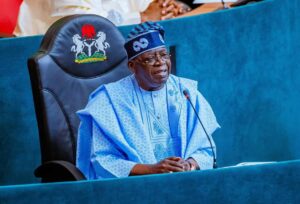
A Shadow Over Democracy Day: Tinubu Vows Crackdown on Terror Financed ‘By the Blood of Nigerians’
The Audited Balance Sheet vs. The Frontline Reality
The tension between budgetary output and public safety is raising urgent questions among security experts regarding the efficiency and transparency of Nigeria’s defense spending.
An analysis of the treasury data reveals that while N57.78bn has been spent, it represents a mere 1.24% utilization of the total N4.66 trillion approved security budget for 2026. Critical gaps in funding implementation remain stark:
Breakdown of Security Expenditures (Jan–Apr 2026)
Funding Allocation Amount Spent Proportion of Spend;
Defense Equipment Procurement N21.39 billion ~37%
Security Equipment N14.16 billion ~24%
Military Barracks (Construction & Provision) N5.84 billion ~10%
Police Stations & Barracks N5.17 billion ~9%
Defense Equipment Rehabilitation & Repairs N5.65 billion ~10%
Routine Security Operations & Votes N3.32 billion ~6%
Despite these multi-billion naira allocations, critical operational lines remain entirely dry. The military operations budget line, specifically tagged for “Operation Lafiya Dole and Other Operations of the Armed Forces”, recorded zero expenditure, despite a N500 million budget provision. Similarly, not a single naira has been released from the N2.53 billion earmarked for the kitting of Armed Forces personnel.
A Week of Terror on the Highways and in the Hinterlands
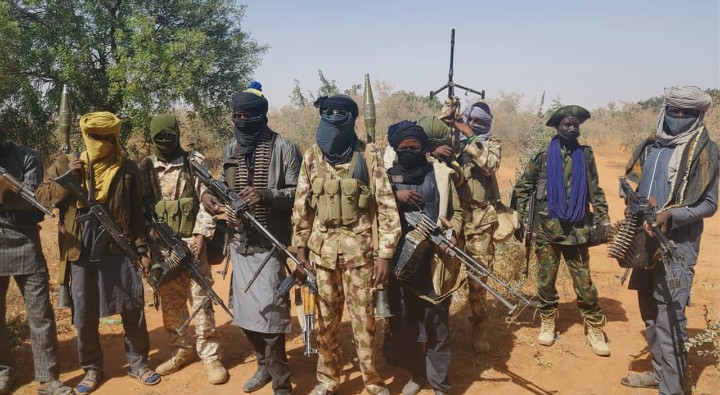
While bureaucratic wheels turn slowly in Abuja, violent crime moves with terrifying speed across Kaduna, Katsina, Zamfara, and Kebbi states.
The latest weekly police ledger reads like a war diary:
37 homicide cases
27 banditry attacks
24 kidnappings
8 armed robberies
2 terrorism-related strikes
Behind every statistic is a fractured community. In Katsina State, a routine journey turned into a nightmare when bandits blocked the Katsina-Kankara highway, intercepting a commercial vehicle. Though police forces successfully rescued nine passengers, the driver and one passenger vanished into the bush, their fates remaining unknown.
”This is the highest level of insecurity in the military and political history of the Federal Republic of Nigeria,” warns security analyst Lekan Jackson-Ojo. “It is an indirect pronouncement that Nigeria is an unsafe territory now. We have a battered economy, and there is no economy anywhere in the world that thrives under insecurity.”
Jackson-Ojo notes that the military itself is suffering unprecedented losses, pointing to the deaths of nearly four generals in the past three months without significant reprisal attacks. He sharply criticizes the political status quo: “What preoccupies our political class is campaign, campaign, campaign. This is a sad situation.”
Other experts argue that looking at the naira value alone misrepresents the sheer scale of the logistical challenge. Chidi Omeje, a prominent security analyst, points out that the military is currently deployed in over 30 distinct domestic counter-terrorism operations, leaving personnel exhausted and resources diluted.
”One Mine-Resistant Ambush Protected (MRAP) vehicle alone costs almost N100 billion,” Omeje explains, putting the financial figures into global context. “If you put an aircraft in the sky to do an operation, do you know how much it costs for just one hour? By the time you convert that N56 billion into dollars, it amounts to very little on the global defense market.”
Ultimately, Omeje argues, hardware and checkpoints are merely treating the symptoms of a deeper structural rot.
“Unless we are able to deal with the root causes, we will keep going in circles. Most of the issues are born out of bad governance, wrong prioritization, corruption, and pervasive poverty, which has made people see crime and criminality as an option for survival.”
Combined with porous border management across the Sahel, stretching from Mali and Burkina Faso straight into Nigeria’s rural heartlands, the crisis has morphed into a regional contagion that local forces are struggling to contain.
As mid-year approaches, the dilemma for Nigeria remains unchanged. The government is spending more, yet delivering less security. Until budget allocations translate into fully kitted troops, secure highways, and socio-economic stability for rural communities, the metrics of success will not be measured in billions of naira saved, but in human lives protected.