
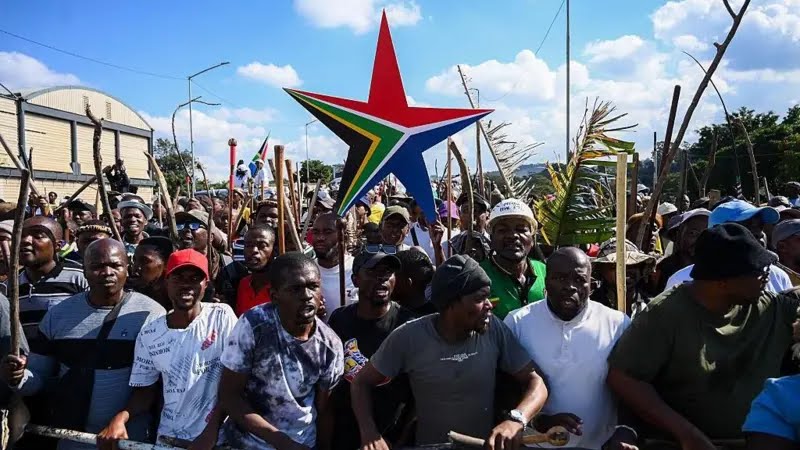
South Africa Tightens Security Ahead of June 30 Protests
South African authorities have stepped up security across the country ahead of anti-immigration protests scheduled for 30 June, with thousands of police officers and volunteers deployed to maintain law and order.
Police said the demonstrations are expected to take place in Johannesburg, Hillbrow and Midrand, where organisers plan to submit memoranda on immigration policies, border security and employment concerns. Officials said the protests have been approved and security personnel will be stationed along the planned routes to protect lives, property and public order.
Acting Minister of Police Firoz Cachalia said the role of the police is not to stop lawful demonstrations but to ensure they are conducted peacefully. He said officers would protect the rights of protesters as well as those of residents and businesses in affected areas, while taking action against anyone involved in violence, intimidation, vandalism or other criminal acts.
Read more: The Bigger Story Behind Nigerians Returning From South Africa Xenophobic Experience
In Johannesburg, police warned motorists and commuters to expect heavy traffic as three approved marches take place at the same time. Law enforcement officers have been assigned to monitor the processions, manage traffic and respond to any security concerns.
In Mpumalanga, Acting Provincial Commissioner Major General Zeph Mkhwanazi said the province is prepared to ensure that 30 June remains a normal working day. He warned that looting, road blockades and attacks on businesses would not be tolerated.
KwaZulu-Natal police also confirmed that security measures have been put in place to allow peaceful demonstrations while preventing criminal groups from taking advantage of the protests.
Read more: Ex-South Korean President Gets 30-Year Jail Term Over North Korea Drone Operation
Authorities said nearly 10,000 community volunteers have been mobilised, particularly in KwaZulu-Natal, to monitor developments alongside police and other stakeholders.
The demonstrations come as anti-immigration groups continue to demand stricter enforcement of immigration laws. Organisers insist their intention is to pressure the government to strengthen border control and address illegal immigration rather than shut down the country.
Several African countries have also begun repatriating citizens who chose to leave South Africa before the protests. Uganda announced that 746 of its nationals had registered for evacuation, joining Nigeria, Ghana, Malawi, Mozambique and Zimbabwe, which have already returned citizens in separate batches.