Godsent Ogbebor
Iran threatens wider conflict as US tightens economic pressure
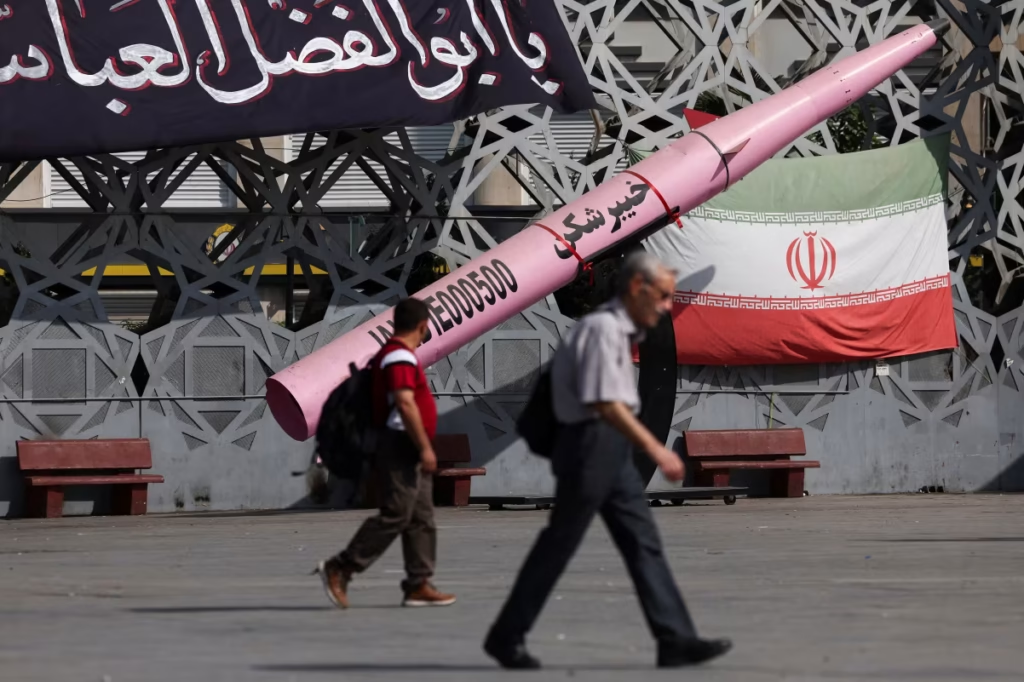
Iran has warned that Washington’s latest attempt to tighten the economic screws on Tehran could trigger a much wider regional confrontation, threatening retaliation against oil producers, shipping routes and countries it considers complicit in the US-led campaign.
The warning came after US Treasury Secretary Scott Bessent announced new measures targeting networks Iran has developed to circumvent American sanctions, expanding pressure on businesses and countries involved in sectors including shipping, technology and digital assets. Rather than introducing an entirely new sanctions regime, Washington is largely expanding enforcement of existing restrictions while warning that tougher measures could follow against countries that continue doing business with Tehran.
Iran, however, has signalled that attempts to further isolate its economy will not be met with economic concessions. Instead, officials have warned that Tehran could raise the cost of the pressure by targeting the wider energy and commercial networks on which global markets depend.
The Strait of Hormuz remains at the centre of that threat. Iran has already restricted shipping through the strategic waterway, which before the war carried roughly one-fifth of global oil supplies. With regional producers increasingly finding alternative routes to move their crude, Tehran has warned that it could extend its actions beyond the strait and target oil shipments elsewhere in the Persian Gulf.
Mohsen Rezaei, a senior Iranian security official, said that if the economic campaign against Iran continued, the country could prevent oil exports through the Strait of Hormuz and other routes in the Persian Gulf.
“We will retaliate in an earthquake-like manner,” he said in a televised interview.
Such a move could have consequences far beyond Iran and the United States. Any major disruption to oil shipments from the Gulf could tighten global supplies and push crude prices higher, with the effects potentially reaching petrol stations, transport costs and consumer prices in countries far removed from the conflict.
Saudi Arabia has already redirected about five million barrels of oil per day through its East-West pipeline to reach export terminals on the Red Sea, while other Gulf producers have reportedly rerouted another two million barrels per day to reduce their dependence on the Strait of Hormuz.
Iran has nevertheless indicated that these alternative routes will not necessarily remain beyond its reach. Tehran has published a list of 45 vessels it says have violated its restrictions on shipping through the strait and warned that vessels refusing to comply could face measures including detention, fines or confiscation.
The confrontation could also extend geographically if Iran follows through on threats to target countries providing military or logistical support to the United States and Israel.
Iranian Foreign Ministry spokesman Esmail Baghaei said Tehran regarded countries that supported American and Israeli military action against Iran as participants in what he described as aggression against the Islamic Republic.
Read also: Nepal floods leave hundreds of foreigners missing as rescue efforts intensify
Iran has specifically pointed to US refuelling aircraft operating from Bulgaria, raising the possibility that the NATO member could become a target if Tehran decides that its territory is being used to support American operations.
That would represent a significant escalation, potentially transforming the conflict from a confrontation centred largely on Iran, Israel, the United States and the Gulf into a crisis involving a European NATO member.
Iran has already demonstrated an ability to extend the consequences of the conflict beyond its immediate borders, with attacks reported across several countries in the region. Any direct strike on a European ally of Washington could therefore introduce an entirely different dimension to the confrontation.
But perhaps the most consequential threat is developing around Iran’s nuclear programme.
For years, Tehran has maintained that its nuclear activities are peaceful and has denied seeking a nuclear weapon. That position has come under increasing pressure following repeated attacks on Iranian nuclear facilities and the killing of Supreme Leader Ayatollah Ali Khamenei, who had opposed the development of nuclear weapons.
Iranian lawmakers are now debating a proposal to withdraw from the Nuclear Non-Proliferation Treaty, while some officials have begun publicly questioning why Tehran should continue to observe restrictions on nuclear weapons if its adversaries are prepared to attack it regardless.
Rezaei has himself suggested that the nuclear question could be reconsidered, reflecting a shift in the rhetoric coming from parts of Iran’s political establishment.
The development is significant because the possibility of Iran abandoning the treaty could create another crisis alongside the existing military and economic confrontation. It could also intensify pressure on other countries in the region to reassess their own security calculations.
The US strategy, meanwhile, appears to be built around the assumption that increasing economic pressure can force Tehran to reconsider its position.
But after years of sanctions and months of war, Iran has shown a willingness to absorb significant economic costs while searching for alternative ways to keep its economy functioning.
Sina Toossi, a senior fellow at the Center for International Policy in Washington, said Iran retained the ability to shift some of the costs imposed by Washington back onto the region by threatening energy supplies, infrastructure and commerce.
The problem for Washington is that the broader its economic blockade becomes, the more countries it needs to cooperate with it, potentially giving Tehran more targets to pressure.
Iran’s strategy, therefore, appears increasingly centred on making the consequences of economic strangulation impossible to contain within its borders. Tehran can attempt to adapt domestically, seek alternative economic routes and simultaneously signal that the cost of isolating Iran could be imposed on the wider region.
That creates a dangerous calculation for the United States. Washington can increase pressure on Iran, but every additional measure creates the possibility of another Iranian response, whether through oil supplies, shipping, regional infrastructure or the nuclear programme.
The result is a confrontation in which economic policy and military deterrence have become increasingly difficult to separate.
For Iran, the message is that economic pressure will not be absorbed quietly. For Washington, the challenge is to force Tehran back to the negotiating table without triggering the very regional escalation that could make an eventual diplomatic settlement even harder to achieve.