
Godsent Ogbebor
CIA Director John Ratcliffe’s visit to Moscow has brought into focus the difficult position facing both Russia and the United States as their leaders remain locked in wars that have proved harder to end than initially expected.
Ratcliffe travelled to Moscow this week for talks with senior Russian intelligence officials, with the Ukraine war high on the agenda. According to people familiar with the discussions, the CIA director warned Russia against overt or covert attacks on NATO territory and urged Russian officials to stop providing economic and military support to Iran.
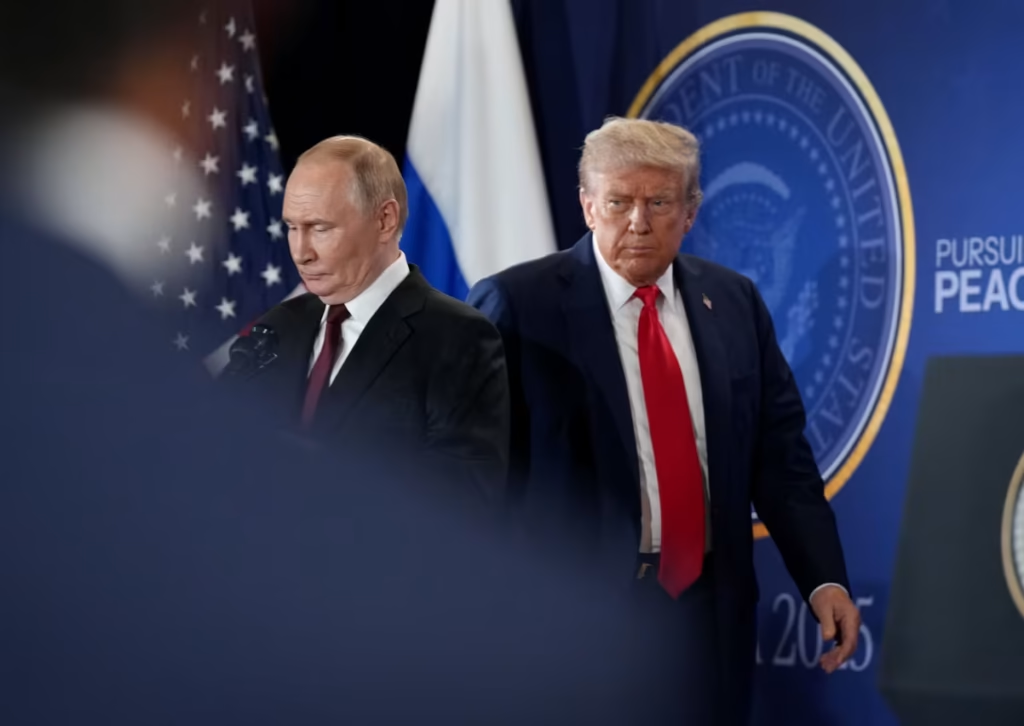
The visit came at a significant moment for President Vladimir Putin, whose war in Ukraine has continued despite Russia’s military advantage, and for President Donald Trump, whose six-month war with Iran has reached a stalemate and forced his administration to turn increasingly towards economic pressure.
Although the circumstances of the two conflicts are different, the two leaders now face a similar political problem. Neither has achieved the outcome originally sought, while ending the wars without securing a clear victory could carry political costs.
Putin launched the invasion of Ukraine after apparently expecting Russia’s superior military strength to deliver a quick result, but Ukrainian resistance has prolonged the conflict and forced Moscow into a costly war. Trump’s campaign against Iran has similarly encountered resistance from an opponent whose military capabilities are considerably smaller than those of the United States but which has relied on asymmetric tactics, including drones and other relatively inexpensive technologies.
The contrast between military strength and battlefield results has raised questions about how both leaders are being advised. The New York Times, in its report on Ratcliffe’s visit, noted longstanding concerns among foreign policy officials that Putin may not be receiving a full and accurate picture of the war in Ukraine. Similar questions have emerged around Trump, particularly as he continues to present the Iran conflict in more favourable terms despite the absence of a decisive outcome.
The two countries have experienced the consequences of prolonged foreign wars before. Russia’s struggle in Ukraine has drawn comparisons with the United States’ experience in Vietnam, while both countries were also badly affected by their interventions in Afghanistan. Yet the differences between the current conflicts remain important.
Trump has not committed large numbers of American ground troops to Iran in the way Putin committed Russian forces to Ukraine. The Russian war has produced enormous casualties, with more than 1.4 million Russians estimated to have been killed, wounded or gone missing, according to the Center for Strategic and International Studies.
Putin also faces fewer domestic political restraints than Trump. The scale of Russian casualties and the length of the war have been absorbed within an authoritarian political system, while a similar human cost would be far more difficult to sustain politically in the United States.
The conduct of the two wars has also differed. Russia has repeatedly targeted Ukrainian cities and energy infrastructure with missiles and drones, while the Trump administration has largely avoided deliberate attacks on civilians and civilian infrastructure. However, the administration has yet to provide a full public account of a February missile strike on an Iranian school that killed nearly 200 people, including children and adults, and was reportedly linked to outdated intelligence.
Read also: Trump Reportedly Considers Clemency for Sean ‘Diddy’ Combs
Ratcliffe’s Moscow visit therefore carries significance beyond the immediate discussions between American and Russian intelligence officials. It comes as the two wars increasingly overlap with wider questions about global security, alliances and the balance of power.
The CIA director’s warning over possible Russian attacks on NATO territory reflects growing concern in Europe that Moscow could eventually test the alliance’s resolve. At the same time, his attempt to persuade Russia to reduce its support for Iran highlights the complicated relationship between the two conflicts.
Russia has strategic interests in Iran and has reportedly provided Tehran with intelligence on the movements and locations of American troops, aircraft and ships. Much of that information, according to US intelligence reporting cited by CNN, has come from Russia’s satellite capabilities.
That relationship makes Moscow an unlikely partner in Trump’s effort to increase economic pressure on Iran. The United States is seeking the cooperation of Russia, China and other countries that maintain important trading relationships with Tehran, but experts believe securing such cooperation will be difficult.
Firas Maksad, managing director for the Middle East and North Africa at Eurasia Group, said the success of the economic pressure would depend partly on cooperation from China, Russia and other regional actors that trade with Iran. He said securing that cooperation would be particularly difficult because of their existing relationships with Tehran.
Russia also has little obvious incentive to help Trump resolve the Iran conflict if doing so does not advance its own interests in Ukraine. Any attempt to link American concessions on Ukraine to Russian cooperation over Iran would face serious obstacles, particularly given Trump’s previous failure to persuade Kyiv to accept territorial concessions.
Trump had previously said he could end the Ukraine war within 24 hours, but his peace efforts have yet to produce an agreement. His repeated assertion that Putin wants peace has also been challenged by Russia’s continued military campaign.
The situation has become more complicated as the Iran war reaches its six-month mark. The Trump administration is now moving from sustained military action towards a broader campaign of economic pressure, while Iran has threatened to increase the cost of the conflict for the United States and its allies.
The war has already affected American military resources, with the prolonged campaign placing pressure on munitions, naval forces and air capabilities. US officials and lawmakers have warned that the strain could influence how Russia and China assess American military capacity and its willingness to respond to future crises elsewhere.
Democratic Senator Mark Kelly of Arizona said the situation benefits Russia because Moscow is supporting Iran while the United States remains tied down by the conflict.
Trump, however, continues to argue that his relationship with Putin contributes to global stability. Speaking on Thursday, he said he did not expect Russia to attack NATO territory, pointing to his relationship and discussions with the Russian president.
Ratcliffe’s visit has consequently created an unusual moment in relations between Moscow and Washington. The CIA director arrived in Russia to address concerns over a war that has become a major burden for Putin, while Trump remains engaged in another conflict that has also failed to produce the decisive outcome he once promised.
For Putin, the Ukraine war remains deeply connected to Russia’s military ambitions and its confrontation with the West. For Trump, the Iran conflict is increasingly tied to questions about American military strength, economic pressure and the credibility of his foreign policy.
The two wars are not the same, and neither are the leaders’ political systems or military strategies. But both conflicts have demonstrated the difficulty powerful countries can face when an opponent refuses to surrender simply because it possesses fewer conventional military resources.
Ratcliffe’s Moscow trip therefore comes at a time when the consequences of both wars are extending well beyond their original battlefields, with the decisions taken by Putin and Trump increasingly affecting their countries’ alliances, resources and standing in the wider world.





1 thought on “Ratcliffe’s Moscow Visit Highlights US, Russia War Dilemmas”