by Lovely Onohwakpor
China Poised to Overtake U.S. as World’s Leading Nuclear Power Producer
China is on track to become the world’s largest producer of nuclear energy, with projections indicating its capacity could surge far beyond that of the United States as new plants come online.
Read also: Nigeria Poverty Hits 63% Despite Lower Inflation — World Bank
Data compiled by Global Energy Monitor shows that while the United States currently leads with 102,475 megawatts (MW) of installed nuclear capacity, China—now ranked third at 60,898 MW—is rapidly expanding its footprint through an aggressive pipeline of projects.
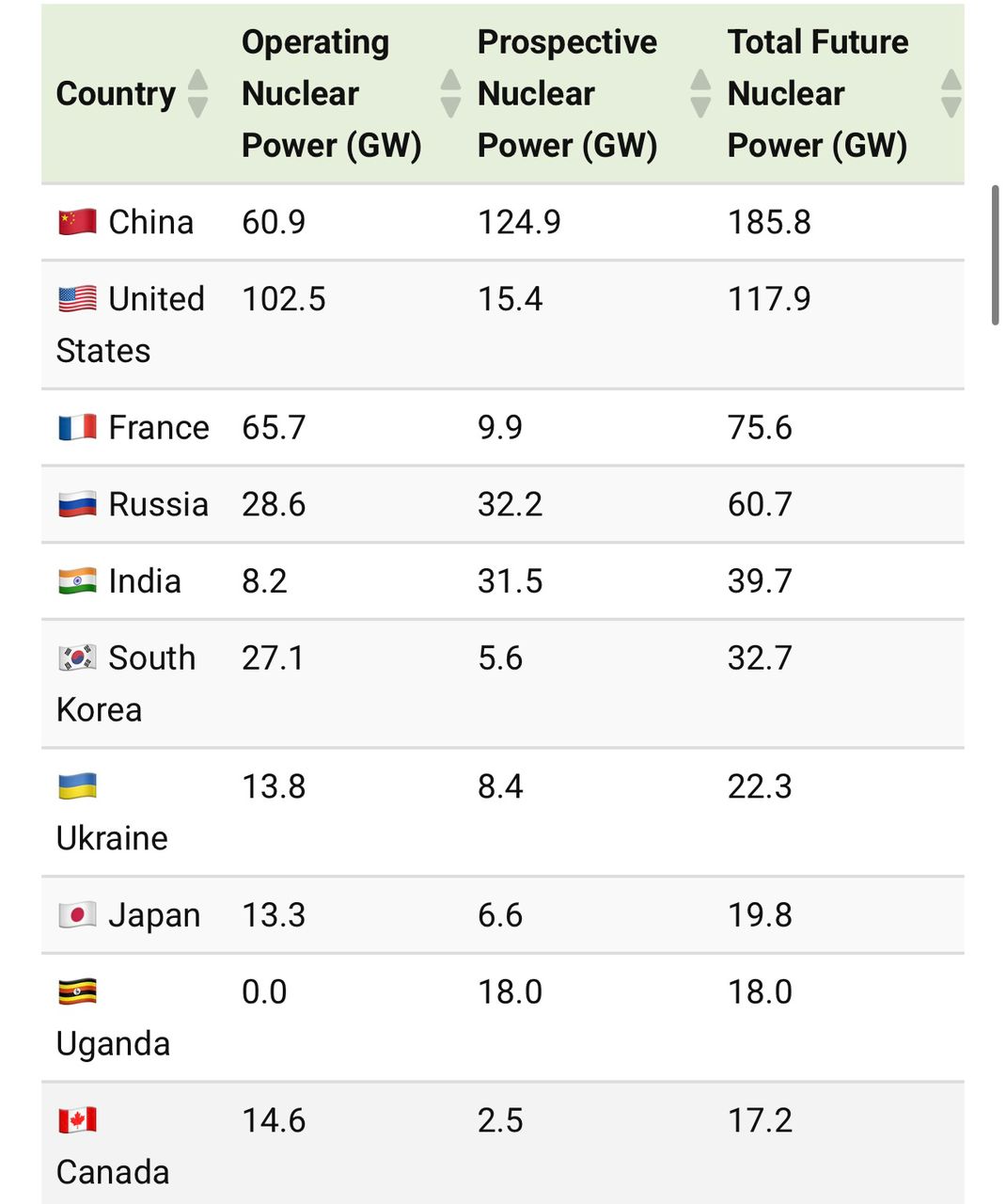
If all planned developments are completed, China’s nuclear capacity could reach approximately 185,812 MW, placing it well ahead of the U.S., projected at 117,910 MW, and France, expected to reach 75,590 MW.
The anticipated shift underscores a broader global push toward reliable and low-carbon energy sources as electricity demand continues to rise. Nuclear power, which currently supplies about 10 percent of global electricity, is increasingly seen as a key component of long-term energy security strategies.
France remains one of the most nuclear-dependent nations, generating roughly 69 percent of its electricity from nuclear energy, while the United States maintains its lead due to a long-established network of reactors.
Meanwhile, China’s expansion reflects its strategic effort to reduce reliance on fossil fuels and strengthen grid stability. The trend also highlights growing geopolitical implications, as countries with strong nuclear capacity are better positioned to ensure energy independence.
The United Kingdom, home to the world’s first commercial nuclear power station in 1956, is also seeking to revive its nuclear sector under plans described as a “golden age of nuclear.” However, its projected capacity of 15,394 MW would place it outside the top tier globally.
Emerging players are also entering the space. Countries such as Uganda, Poland, and Türkiye are expected to significantly scale up nuclear capacity from zero, with ambitious long-term targets.
Current expansion efforts remain focused on nuclear fission—the technology behind all existing reactors—though innovations such as small modular reactors are gaining traction for their potential to lower costs and improve safety.
In contrast, nuclear fusion, widely regarded as a future breakthrough energy source, remains in the experimental stage and has yet to achieve commercial viability.
For now, the global nuclear race is being driven by fission-based technologies, as countries prioritize dependable, low-carbon energy solutions that can be deployed within the coming decade.