EU to Tighten Food Import Rules in Response to Farmer Protests
The European Union is set to introduce stricter regulations on food imports that do not meet its standards as part of a broader agricultural policy review. The European Commission is expected to unveil the new policy blueprint on Wednesday in response to ongoing concerns from farmers over trade competition and regulatory challenges.
The policy document, titled “Vision for Agriculture and Food,” aims to address farmer grievances, particularly regarding market competition from countries with less stringent regulations. According to a draft seen by AFP, the commission plans to align production standards for imported goods with those of EU farmers to prevent unfair competition. This includes ensuring that hazardous pesticides banned in the EU are not reintroduced through imported food products. However, the draft does not specify a timeline for implementation or which products and countries may be affected.
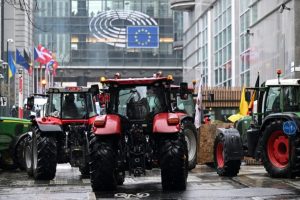
The move follows widespread farmer protests across Europe last year, where demonstrators expressed frustration over high regulatory burdens, low revenues, and competition from non-EU imports. Many farmers blocked roads, threw eggs, and sprayed manure in protest, demanding better policies.
CAP Reform and Subsidy Adjustments
Beyond trade policies, the EU also plans a major overhaul of the Common Agricultural Policy (CAP). The draft document suggests that Brussels will shift its subsidy allocation approach, ensuring funds are directed towards small and medium-sized farmers rather than large landowners.
Under the current system, CAP subsidies are determined by farm size, favoring larger operations. However, the new policy aims to prioritize young farmers, environmental conservation efforts, and those working in challenging agricultural conditions.
With €387 billion ($460 million) allocated to CAP for 2021-2027, negotiations for the next funding cycle (2028-2034) are expected to be highly contentious during Ursula von der Leyen’s second term as EU Commission President.
Trade and Supply Chain Diversification
The EU also intends to diversify its agricultural supply chains to reduce dependency on specific regions, particularly concerning fertilizer imports from Russia. The new strategy seeks to streamline access to funding for small farmers by simplifying control and compliance conditions.
Agriculture accounted for 1.3% of the EU’s GDP in 2023 and employed approximately 30 million people, making up 15% of the bloc’s total workforce. Given its economic and political significance, the EU’s upcoming policy changes are expected to reshape the agricultural landscape in the years ahead.