
By Esohe Aifuwa
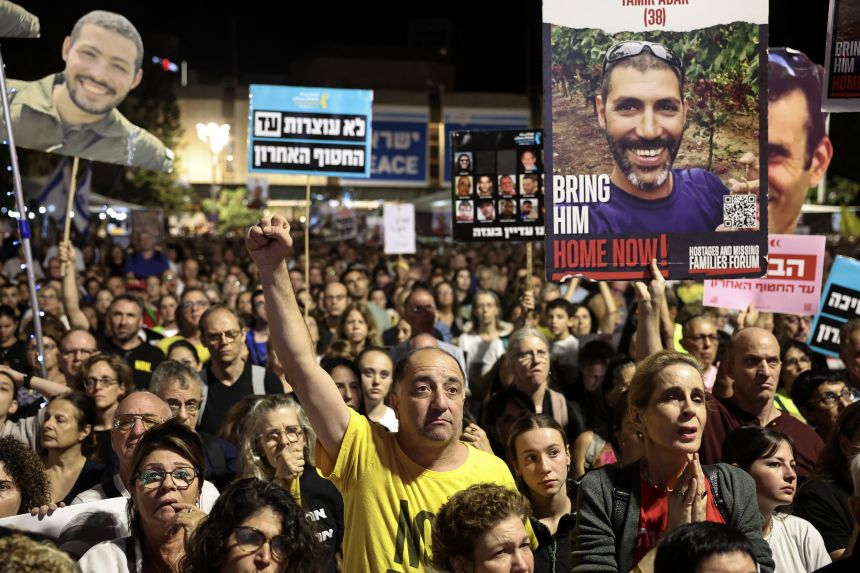
Families of Israeli Hostages Demand Halt to Ceasefire Progress Until Bodies Are Returned
Families of Israeli hostages have called for a suspension of the next phase of the US-brokered Gaza ceasefire until Hamas returns the bodies of all captives who died in its custody.
In a statement on Monday, the Hostages and Missing Families Forum said Hamas is aware of the locations of all deceased hostages but has yet to hand over the remains of 13 people. The group urged Israel, the United States, and mediators to hold off on implementing further steps in the peace deal until Hamas fulfills its obligations.
Read More:https://mediaerrandsnews.com/qatar-seeks-arab-islamic-support-after-israeli-attack/
The ceasefire, which began on October 10, brought an end to the war between Israel and Hamas that erupted after the militant group’s deadly cross-border attack left 1,221 people dead in Israel and 251 others taken hostage.
Israel’s military response in Gaza has since killed more than 68,000 people, according to figures from the territory’s health ministry, which the United Nations regards as credible.
As part of the truce, Hamas has released its remaining 20 living hostages and handed over the remains of 15 others already confirmed dead. However, the group says it is still searching for 13 more bodies, including 11 Israelis and two foreign workers from Thailand and Tanzania.
Read More:https://mediaerrandsnews.com/trump-gives-hamas-sunday-deadline-on-gaza-deal/
Lead Hamas negotiator Khalil al-Hayya said efforts to locate the bodies have been hindered by the scale of destruction in Gaza and the deaths of those who initially buried them.
In response, Egypt has sent recovery teams and heavy machinery into Gaza with Israeli approval to assist in the search.
While no timeline has been set for the next phase of the ceasefire plan, Washington is reportedly working on forming an international security force made up of troops from Arab and Muslim countries to maintain peace. The US military has also established a coordination centre in southern Israel to oversee the truce and manage aid operations.
Despite pulling back from major urban areas, Israel still maintains control of about half of Gaza along what it calls the “Yellow Line,” and continues to restrict access through the Rafah border crossing, drawing appeals from humanitarian groups for wider aid entry.
