
By Gift Aitegbe
Presidency Challenges World Bank Poverty Estimate, Highlights Local Realities and Reform Efforts
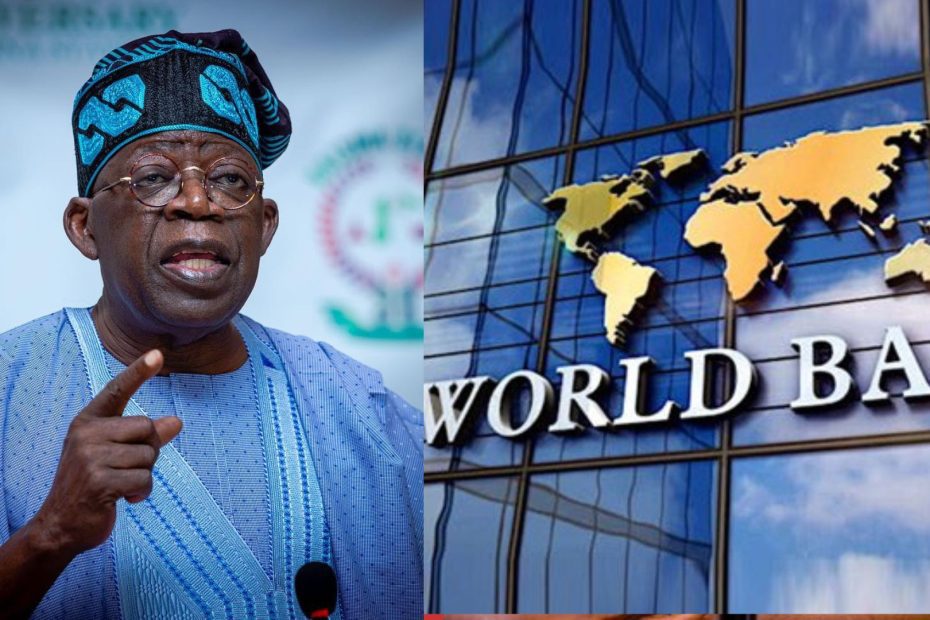
The Nigerian Presidency has dismissed the World Bank’s recent claim that 139 million Nigerians live in poverty, calling the figure an abstract statistical projection rather than a reflection of the country’s lived realities.
The Bank’s report, which calculates that 61 percent of Nigerians now fall below the poverty line, marks a sharp increase from 81 million in 2019, citing a 6.7 percent decline in average consumption between 2019 and 2023, particularly in urban areas.
Reacting on Wednesday, Sunday Dare, Special Adviser to President Bola Ahmed Tinubu on Information and Strategy, argued that the World Bank’s analysis, based on the global poverty threshold of $2.15 per day from 2017 Purchasing Power Parity, does not accurately capture the current situation on the ground.
He explained that the figure translates to about 100,000 naira per month, a number far above Nigeria’s 70,000 naira minimum wage, and therefore not a practical measure of everyday economic life.
Dare stressed that the Bank’s estimate relies on outdated household consumption data from 2018 and 2019, which fails to account for the informal and subsistence sectors that sustain millions of Nigerians. “There must be caution against interpreting the World Bank’s number as a literal headcount,” he said.
“It is a global modelled estimate, not an empirical representation of 2025 conditions. What truly matters is Nigeria’s trajectory and ours is one of recovery and inclusive reform.”
The government’s position reflects an ongoing tension between international statistical models and local experiences. While external organizations like the World Bank employ standardized measures to compare countries globally, critics argue that such frameworks often fail to capture informal livelihoods, regional disparities, and community-level resilience strategies that Nigerians use daily to survive and thrive.
Experts on poverty and development note that Nigeria’s economy is particularly difficult to measure due to its large informal sector.
According to data from the National Bureau of Statistics, informal activities including small-scale trading, subsistence farming, and casual services employ a significant portion of the population and provide essential income, even if these earnings are not formally recorded. These factors can make international comparisons misleading.
“Statistics are helpful, but they cannot tell the full story,” said Dr. Chika Eze, an economist and social policy researcher. “People in Lagos, Abuja, or Port Harcourt may experience different realities from those in rural communities, and a single number cannot capture the complexity of daily life. We have to look at context.”
Read also:
BLACK AI FEST 2025: Where Black Creativity Meets Artificial Intelligence
Ambient Nemesis: Where Emotion Finds a New Language on Screen
REALTIME INTERNATIONAL FILM FESTIVAL 2025
Dare highlighted structural distortions that the Tinubu administration is actively addressing, such as overdependence on imports, low domestic productivity, and regional inequalities.
The government has initiated reforms including the removal of fuel subsidies, unification of the exchange rate, and redirected fiscal policies aimed at productive sectors.
He described these measures as necessary, albeit painful, steps toward building a resilient economy that reduces poverty over time.
Even the World Bank, Dare noted, recognizes the positive impact of these reforms on macroeconomic stability and renewed growth momentum. “The reforms are necessary and the direction is right,” he said. “The foundation for a fairer and more prosperous Nigeria is being firmly laid.”
While the Presidency’s stance focuses on policy and structural reforms, citizens and civil society groups have offered contrasting perspectives, reflecting the human side of economic data.
In Lagos, small business owner Aisha Musa described daily challenges that she believes numbers alone cannot capture. “I run a small food stall in the market, and some days I barely make enough to pay rent,” she said. “Official reports say things are improving, but what matters to people like me is whether I can feed my children today.”
Similarly, farmers in northern Nigeria have expressed concerns about rising costs of inputs like fertilizer and seeds. “We are working hard, but inflation and transportation costs make it difficult to survive,” said Ibrahim Usman, a farmer in Kano State. “Reports from abroad do not see these struggles. They do not see how we manage with what we have.”
These voices illustrate the tension between high-level statistical estimates and everyday realities. While the Presidency emphasizes long-term economic strategy and structural correction, local experiences highlight persistent hardships, particularly in marginalized areas.
Analysts argue that bridging this gap requires integrating real-time field data with broader macroeconomic assessments.
The government’s rejection of the World Bank figures also has political dimensions. Critics of the administration have pointed to rising fuel prices, inflation, and food costs as evidence that poverty is worsening for ordinary Nigerians.
Opposition voices argue that while macroeconomic indicators may show improvement, many citizens continue to experience economic stress, particularly in urban slums and rural regions.
In response, Dare emphasized that global benchmarks are not designed to capture these nuances. “We are focused on real, measurable improvements in people’s lives,” he said. “Policy is about laying foundations that will benefit all, not just producing numbers that look good on paper.”
One area of concern highlighted by the Presidency is the informal economy, which remains largely unrecorded but is vital to livelihoods. Street vendors, artisans, transport operators, and home-based entrepreneurs provide essential services and contribute significantly to local economies. Ignoring this sector in statistical models risks misrepresenting poverty levels and creating misguided policy responses.
Analysts also warn that overreliance on international poverty metrics can distort public perception and policy priorities. “If policymakers and citizens treat projected numbers as absolute truth, we risk misallocating resources and missing opportunities to address local challenges effectively,” said Dr. Eze. “Nigeria’s real poverty story is diverse and regionally specific.”
Regional disparities further complicate the picture. While urban centers like Lagos, Abuja, and Port Harcourt show signs of economic growth and infrastructure development, many northern and southeastern communities continue to face food insecurity, limited access to healthcare, and underdeveloped infrastructure. Any meaningful discussion of poverty must account for these variations and tailor solutions accordingly.
Dare also pointed to ongoing government programs designed to provide immediate relief to vulnerable populations. Social safety nets, conditional cash transfers, and targeted subsidies aim to support low-income households while broader reforms take effect. These initiatives, combined with investment in education, healthcare, and infrastructure, are intended to address both short-term needs and long-term structural challenges.
Education is another critical factor. Nigeria’s youth population is growing rapidly, and access to quality education and vocational training is essential to break cycles of poverty. Government initiatives aimed at expanding educational opportunities, particularly in underserved regions, are central to the administration’s inclusive growth strategy.

Healthcare access, particularly for maternal and child health, also shapes poverty outcomes. Programs to expand healthcare coverage, improve vaccination rates, and reduce preventable diseases are part of a holistic approach to enhancing living conditions across the country.
Economic reform, while essential, often faces short-term resistance due to visible hardships such as rising fuel costs, inflation, and unemployment. Dare acknowledged these challenges but framed them as necessary trade-offs for long-term stability. “Growth without reform is unsustainable,” he said. “We are laying the groundwork for a future where poverty is not just managed but fundamentally reduced.”
Civil society groups have welcomed the administration’s focus on structural reform but stress the need for transparency and accountability. “Reforms must be paired with clear monitoring and communication to citizens,” said Ngozi Okafor, a development advocate. “People need to see tangible benefits in their communities, not just abstract policy goals.”
Local government support is also critical. Initiatives that engage community leaders, cooperatives, and local entrepreneurs help ensure that policy measures reach those most in need. Public-private partnerships, microfinance programs, and community-led projects can amplify the impact of national reforms.
Another important dimension is the role of technology in poverty monitoring and intervention. Digital payment systems, data collection platforms, and mobile-based services can enhance transparency, improve resource allocation, and provide real-time feedback on the effectiveness of programs.
By leveraging technology, policymakers can complement traditional statistical models and provide a more accurate picture of poverty dynamics.
The international community has a role to play, too. While global organizations like the World Bank provide valuable insights and funding, their models must be interpreted with caution. Local expertise, context-specific research, and citizen engagement are critical to crafting effective policies that reflect lived realities rather than abstract projections.
Dare reiterated that Nigeria’s focus remains on empowering households, expanding opportunities, and fostering a resilient economy. He argued that the administration’s reforms are designed not only to stabilize macroeconomic indicators but also to create an environment where citizens can build sustainable livelihoods.
Agriculture, manufacturing, and small and medium enterprises are central to this vision. By redirecting resources toward productive sectors and reducing dependence on imports, the government aims to create jobs, raise incomes, and stimulate domestic value chains.
The Presidency’s critique of the World Bank report also highlights the need for more nuanced understanding of poverty measurement. Metrics that consider only income levels without accounting for access to essential services, social capital, and informal economic activities risk oversimplifying complex realities.
Ultimately, the debate over statistics versus lived experience underscores a broader truth: poverty is not just a number; it is the lived reality of families struggling to meet basic needs.
It encompasses food security, health, education, safety, and dignity. Policymakers, researchers, and international organizations must work together to ensure that measurements and interventions are aligned with this human perspective.
In succinct summation, the Presidency has firmly rejected the World Bank’s portrayal of Nigeria’s poverty situation, emphasizing that statistical estimates cannot replace nuanced, context-driven understanding.
While the government pursues structural reforms and macroeconomic stabilization, local experiences, civil society input, and regional variations remain central to assessing progress.
As Nigeria moves forward, the challenge lies in ensuring that policy translates into real-world improvements for the millions of citizens whose lives are shaped by daily economic realities.
By focusing on both structural reform and human impact, the Tinubu administration seeks to build a future that is not only prosperous on paper but also meaningful in the everyday experiences of Nigerians.
The government maintains that it remains committed to inclusive growth, emphasizing that reforms are not abstract exercises but deliberate steps toward a fairer, more resilient, and opportunity-rich Nigeria.
While the debate over statistical projections will continue, the ultimate measure of success will be the tangible improvement in the living standards of all Nigerians.