Ogbebor Godsent
Jason Arday and the Price of a Public Reckoning
There is an uncomfortable question at the centre of the story of Professor Jason Arday, and it is one that extends far beyond Cambridge, academia or even the specific allegations that surrounded his final years: what happens when the public story of a person becomes so overwhelming that the person themselves is no longer allowed to exist outside the story being told about them?
Jason Arday had already become a symbol long before the allegations that would later dominate public discussion around his name. His rise from a childhood marked by autism, periods of being unable to speak, learning difficulties and profound educational challenges to becoming one of the youngest Black professors at the University of Cambridge had been widely celebrated. His memoir and public reflections transformed his life into a narrative of possibility, particularly for Black students, disabled people and others who had been taught, directly or indirectly, that the structures of elite education were not built with them in mind.
That is precisely why what happened afterwards became so complicated. When allegations and criticisms emerged, the story was no longer simply about an academic facing serious questions. It became a public reckoning in which race, power, gender, institutional accountability, social media, journalism and personal reputation collided. The media had a legitimate responsibility to report allegations involving a prominent public intellectual and university professor. Journalism is not supposed to protect powerful people from scrutiny because they are admired, inspirational or representative of an under-represented community. But scrutiny and sensationalism are not the same thing, and public interest is not always served by turning an unfolding and deeply human situation into a spectacle.
The difficult task now is to examine the story without rewriting it into either sainthood or condemnation. Jason Arday’s life was more complicated than the heroic narrative that once surrounded him, but it was also more complicated than the controversy that later consumed him. And perhaps the most disturbing question raised by his death is whether, at some point, the public stopped asking what had happened and instead became more interested in deciding what kind of person he must have been.

The Story Became Bigger Than the Man: Jason Arday, Public Judgment and the Price of Being Turned into a Symbol
There is an uncomfortable question at the centre of the story of Professor Jason Arday, and it is one that extends far beyond Cambridge, academia or even the allegations that surrounded his final weeks: what happens when the public story of a person becomes so overwhelming that the person themselves is no longer allowed to exist outside the story being told about them?
Jason Arday had already become a symbol long before the allegations that would later dominate public discussion around his name. His rise from a childhood marked by autism, developmental delay and profound educational difficulties to becoming, at the age of 37, the youngest Black professor in the University of Cambridge’s history was widely celebrated as one of the most remarkable academic journeys in Britain.
His story travelled because it carried something larger than academic success. It spoke to Black children who rarely saw themselves represented at the highest levels of British education. It spoke to disabled and neurodivergent people who had spent their lives being measured by what others believed they could not do. It spoke to parents who had been told that their children had limits they might never overcome.
And then, almost with the brutality of a door slamming shut, the story changed.
Allegations concerning plagiarism in Arday’s doctoral work, questions about aspects of his academic record, charity fundraising and elements of his personal history became the subject of increasingly intense scrutiny. Arday denied being a fraud and denied intentional plagiarism, although he acknowledged mistakes in his earlier work.
Liverpool John Moores University had previously reviewed concerns about his doctoral work and concluded that citation problems amounted to honest and reasonable error, but fresh material later prompted Cambridge to announce a new investigation into his appointment and tenure. Before that investigation could run its course, Arday resigned. Days later, he was found dead at his home in south London at the age of 41. Police said his death was unexpected but was not being treated as suspicious.
That sequence of events does not automatically answer the question of responsibility. It would be careless, and deeply unfair, to reduce a human death to a single cause or to suggest that every journalist, academic or critic who raised legitimate questions is responsible for what happened. The facts surrounding Arday’s death remain subject to the appropriate processes. But refusing to assign simplistic blame should not become an excuse for refusing to ask difficult questions about the atmosphere in which he spent his final days.
The media had a job to do. Journalism was right to investigate serious allegations involving a prominent professor at one of the world’s most prestigious universities. Plagiarism allegations are not trivial. Questions about academic appointments, qualifications and institutional due diligence are matters of public interest. A university cannot demand accountability from students and junior academics while pretending that senior professors should be immune from scrutiny because they are admired or because their stories are inspirational. But scrutiny and spectacle are not the same thing.
There is a moment in many public scandals when investigation quietly gives way to accumulation. One allegation produces another question. The question produces a new article. The article produces social media commentary. Old interviews are revisited. Childhood stories are examined. Former classmates are contacted. Statements that once appeared in motivational speeches are pulled apart word by word. Every inconsistency becomes evidence of something larger, until eventually the public is no longer simply asking, Did this particular claim happen? The question becomes, What else might this person have lied about?
That was the danger surrounding Jason Arday’s case. The allegations expanded from concerns about academic work into a much wider examination of his life story. Reports questioned his claims about endurance challenges, charity fundraising and aspects of his childhood and educational history. Some former schoolmates disputed his description of being non-verbal as a child, while others who knew him or his family supported elements of his account.
A contradiction is not automatically proof that an entire life is fabricated. A mistake in a thesis does not automatically mean every achievement that followed was fraudulent. An allegation is not a finding. And equally, a person’s inspiring history does not make allegations against them disappear. The problem with public discourse is that it often struggles to hold these two truths at the same time. Jason Arday was either expected to remain the miracle or become the fraud.
There was little room for the more complicated possibility that he was a gifted and imperfect human being; someone who had achieved extraordinary things, who may also have made serious mistakes, whose personal narrative may have contained inconsistencies, and whose work nevertheless deserved to be examined through fair academic processes rather than through the irresistible machinery of public humiliation.
The names involved in bringing the allegations into public view are important because this was never simply an anonymous internet storm.
Nathan Cofnas, a philosopher formerly associated with Cambridge’s Emmanuel College and now based at Ghent University, was one of the most prominent figures behind the renewed scrutiny. Cofnas published material questioning Arday’s doctoral thesis and highlighted similarities between passages in Arday’s work and the earlier doctoral research of Paula Zwozdiak-Myers. His intervention became particularly controversial because Cofnas had himself previously generated outrage over his writings about race and meritocracy, including a blog post suggesting that a meritocratic system would produce almost no Black professors at Harvard. Cambridge’s investigation into his comments concluded that, while many found his views offensive, they did not amount to discrimination or harassment under the relevant rules.
Dr David Harris, professor emeritus at Plymouth Marjon University, had also previously raised concerns about aspects of Arday’s academic work. His earlier queries contributed to corrections being made to some published papers. David Sanders, a biochemist at Purdue University who has worked on academic misconduct issues, also examined material relating to the plagiarism allegations and publicly argued that the evidence raised serious concerns.
Their names should be mentioned because criticism does not emerge from nowhere, and the public deserves to know who is making serious allegations and on what basis. But naming them should not mean turning the story into a morality play in which every critic becomes a villain and every supporter becomes a defender of wrongdoing.
That would merely reproduce the same intellectual failure that surrounded Arday’s story.
The uncomfortable fact is that legitimate questions may have existed. The equally uncomfortable fact is that some of the people amplifying those questions came with their own histories, ideological positions and controversies around race. Nathan Cofnas, for example, had already become a major figure in debates about race realism and academic merit before his intervention in Arday’s case. This context does not invalidate evidence he presented. Evidence should stand or fall on its merits. But neither does context become irrelevant simply because the subject under scrutiny is a Black academic.
The identity and history of the messenger can matter, particularly when a case is rapidly absorbed into a broader political campaign about diversity, merit and whether Black academics are being promoted because of excellence or institutional guilt. And that is where Jason Arday’s case stopped being only about Jason Arday.
One of the cruelest aspects of representation is that institutions often celebrate the first person through the door while doing very little to make sure the door remains open behind them.
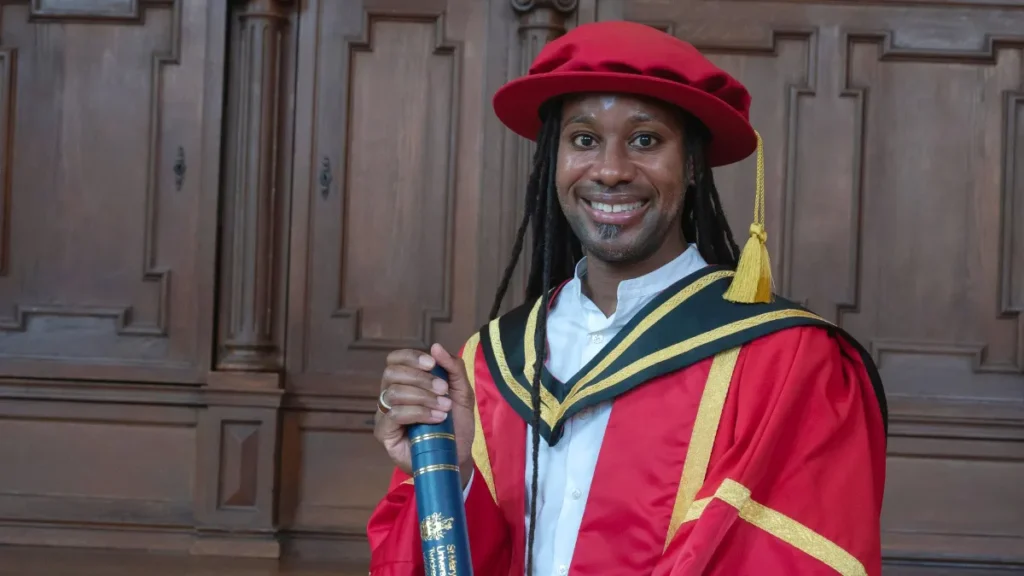
When Arday became Cambridge’s youngest Black professor, his appointment was rightly recognised as historically significant. Black professors remain profoundly under-represented within elite British academia. But history-making appointments also come with a peculiar danger. The individual becomes more than an employee. They become evidence;
- Evidence that the institution is changing.
- Evidence that diversity is working.
- Evidence that barriers are falling.
Read also: Family blames ‘sustained abuse’ for Cambridge professor Jason Arday’s death
And when that individual stumbles, or is accused of wrongdoing, or simply becomes controversial, the same institution and the wider public can suddenly turn that person into evidence of the opposite proposition.
Perhaps the problem was not structural racism after all; perhaps diversity went too far, perhaps standards were lowered, perhaps the institution chose symbolism over merit.
Those arguments quickly emerged around Arday’s case, with critics using the controversy to reopen a wider attack on diversity, equity and inclusion initiatives. Yet reducing the entire issue to whether Cambridge promoted one man too quickly ignores a much larger institutional question: what kind of system creates a situation in which one Black academic is expected to carry the symbolic weight of racial progress in the first place?
If Cambridge failed in its due diligence, that is a Cambridge question. If Liverpool John Moores University failed to identify serious problems, that is an institutional question. If academic supervisors failed to provide adequate support or scrutiny, that too deserves examination. If Arday made serious mistakes or misrepresented parts of his record, those questions deserved proper investigation.
But the rush to turn the controversy into a referendum on Black achievement was something else entirely.
A white academic accused of plagiarism is usually an academic accused of plagiarism. A Black academic accused of plagiarism can suddenly become a lesson about affirmative action, diversity, anti-racism, identity politics and the supposed decline of academic standards. That is the disproportionate burden of representation.
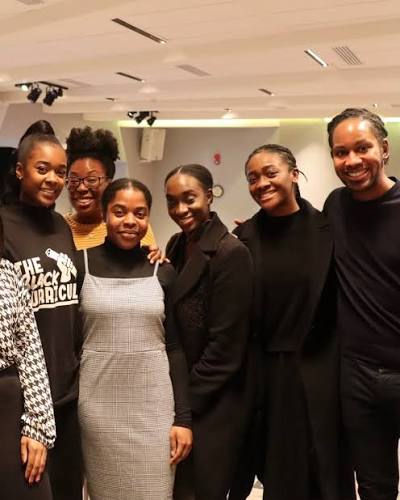
Where was the Black community?
This is perhaps the most painful question of all, and it requires honesty rather than sentimentality.
It would be inaccurate to say that the Black community said absolutely nothing. Black academics and public figures, including Kehinde Andrews, Paul Gilroy, Simon Woolley and others, raised concerns about the racial dimensions of the campaign against Arday and warned against allowing one controversial case to become a weapon against Black scholarship as a whole. After his death, expressions of grief and anger became even more visible.
But there is still a question about timing. Why does solidarity so often become loudest when a person is already gone? Where were the sustained voices when the story was escalating from an academic investigation into a national spectacle? Where was the collective insistence that allegations should be investigated without allowing a man’s entire humanity to be dismantled in public? Where were the people who understood that supporting due process is not the same thing as declaring someone innocent?
Perhaps some were afraid of being accused of defending plagiarism, while others may have believed the allegations were too serious to permit public solidarity, remained uncertain about the facts, or simply chose not to become involved; but whatever the reasons, silence, too, has consequences.
The tragedy of marginalised communities is that solidarity is often made conditional on moral perfection. The person under attack must be entirely innocent before anyone feels comfortable defending their humanity. Yet nobody should have to pass a purity test before being treated with dignity.
It is possible to say that plagiarism allegations must be investigated and still say that an autistic Black man should not be turned into an object of collective public consumption.
It is possible to demand institutional accountability and still recognise that a person under investigation remains a person.
It is possible to say, If Jason Arday made serious mistakes, those mistakes must be addressed, while also saying, The way we talk about him, investigate him and publicly consume his downfall matters.
Those conversations should not have waited until a vigil.
The comparison with other academics
Comparisons with other academics must be handled carefully because not every allegation is the same and not every university responds in the same way. It would be dishonest to simply compile a list of white academics who faced allegations and declare that they were all “protected” while Jason Arday was destroyed.
The more defensible argument is about proportion, institutional response and public spectacle.
Academic misconduct cases involving prominent scholars have often been handled through internal investigations, corrections, retractions, disciplinary procedures and lengthy institutional processes. The academic remains in post while inquiries continue, or the case proceeds through committees and professional channels without their childhood, family history and entire biography becoming a national obsession.
That does not mean those individuals were innocent or that institutions acted properly. In fact, the opposite can sometimes be true: universities have frequently been criticised for protecting senior academics, delaying investigations or prioritising institutional reputation.
The recent Cambridge controversy involving astrophysicist Neil Wyn Evans, for example, raised serious questions about how the university handles allegations, complaints and the protection of its own reputation. Cambridge has also faced criticism and fresh inquiries over institutional processes following the Arday controversy and other disputes.
Outside Cambridge, the case of Sheikh Dr Meshaal Jaber Al-Ahmad Al-Sabah provides another example of how allegations can generate very different institutional responses. The senior Kuwaiti official was recently accused of plagiarism in his doctoral thesis at the University of Portsmouth, with reported similarities to published sources. Portsmouth said it had reviewed the matter and maintained that the thesis was original and that it saw no reason for further action. The case has not generated anything resembling the level of personal excavation that followed Arday. That does not prove racism in itself; the circumstances are plainly different. But it demonstrates why comparisons of institutional response deserve serious examination rather than dismissal.
The point is not that Jason Arday should have been shielded from investigation because others have escaped consequences. The point is simpler and more disturbing: why did his case become so total?
Why were questions about a thesis soon accompanied by questions about his childhood, his speech, his sporting achievements, his fundraising, his previous affiliations and the authenticity of the very story through which the public had come to know him?
At what point does accountability become excavation? At what point does investigation become a hunt for every possible inconsistency? And at what point does the public’s fascination with discovering that a hero might be flawed become more powerful than the original question that justified the investigation?
Jason’s memoir that arrived at the cruellest possible moment
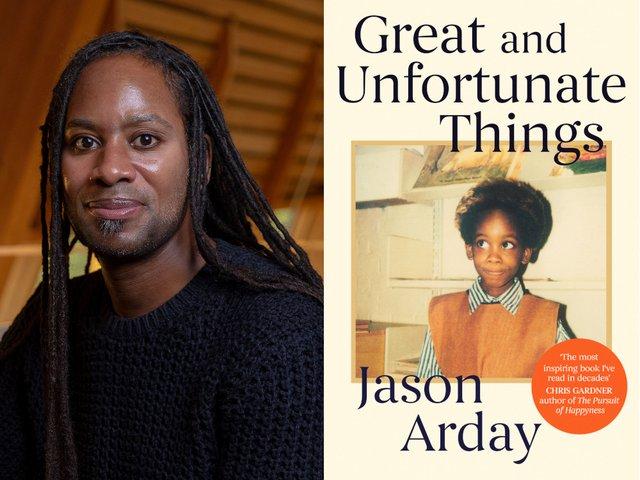
There is something almost unbearably tragic about the timing of Great and Unfortunate Things.
The memoir was the culmination of the story Jason Arday had spent much of his public life telling: a child from south London, diagnosed with autism and developmental delays, struggling for years within educational systems that did not understand him, eventually learning to read and write and finding his way into higher education and, ultimately, Cambridge. The book places his mother, Giff, family, friends and mentors at the centre of that journey rather than presenting his success as the achievement of an isolated genius, however, the title itself now feels painfully prophetic.
Great because there is no reasonable way to look at the arc of Arday’s life without acknowledging its extraordinary dimensions. A Black autistic child who experienced profound educational difficulties became a professor at Cambridge and one of Britain’s most prominent sociologists of education.
Unfortunate because the memoir was released into a world in which the story of his life was already being dismantled in public.
The memoir did not arrive as a quiet reflection at the end of a distinguished career. It arrived in the middle of a storm over whether parts of the public story that had helped make him famous were accurate. And that is where the story becomes even more complicated.
If some claims in a memoir are disputed, those disputes should be examined. Memoirs are not exempt from factual scrutiny simply because they are emotionally powerful. But neither should questions about factual inconsistencies erase the emotional truth of a life, the relationships that shaped it or the barriers a person genuinely encountered.
The problem is that public controversy rarely has patience for complexity; it demands simple choices and clear divisions, reducing people and circumstances to the convenient binaries of hero or fraud, truth or lie, victim or villain.
Jason Arday’s life became particularly vulnerable to that kind of binary because his public identity had been built around extraordinary transformation. Once questions emerged, there was an almost irresistible temptation to reverse the narrative completely.
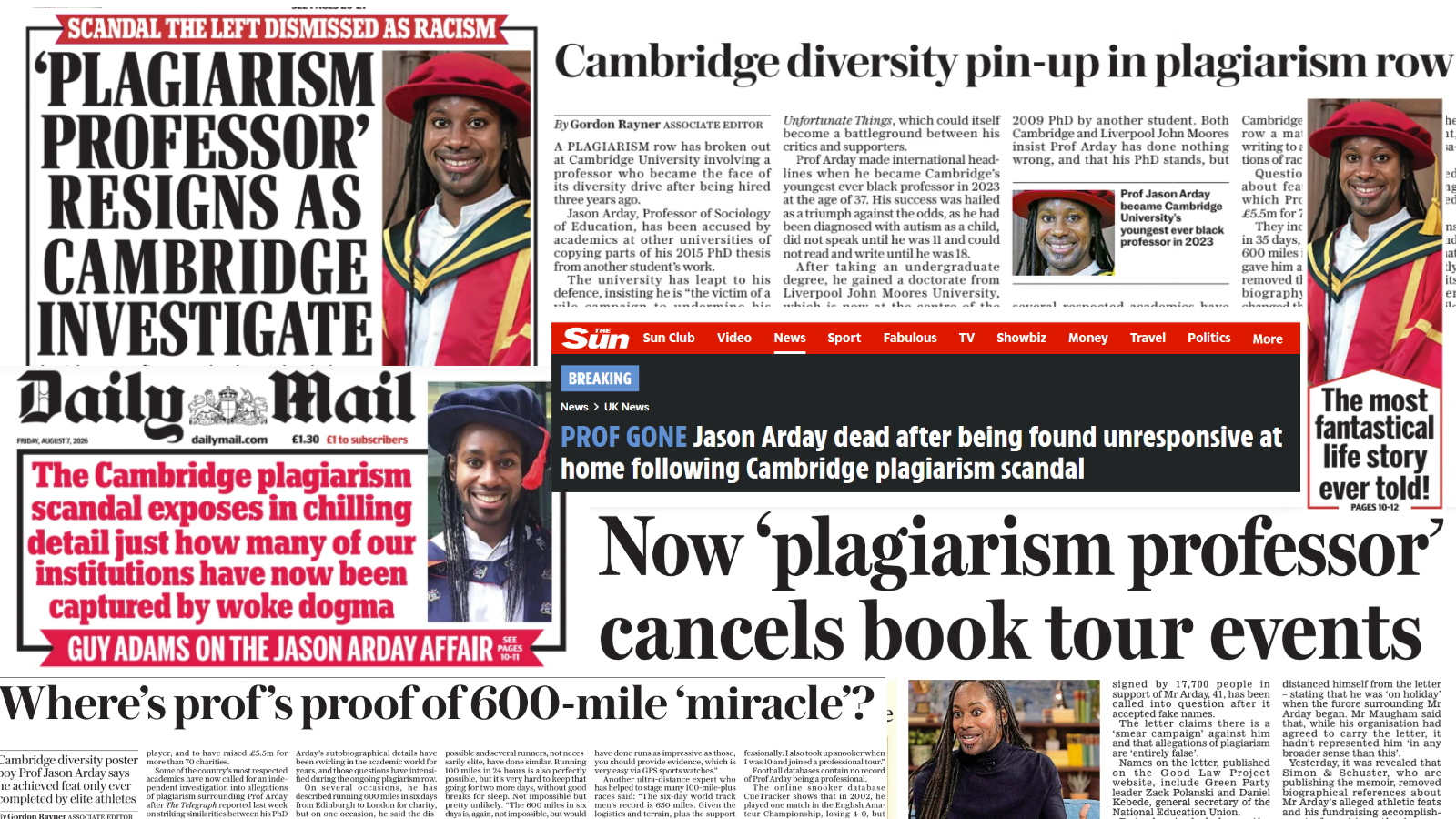
The media did its job, that’s what many said… But did the media know when the job had changed?
Left for me, this is the question journalism must ask itself. The media does not owe powerful people protection. Journalists should not bury allegations because a subject is popular, Black, disabled, progressive, inspirational or politically useful. There are too many examples in history of institutions and communities protecting influential figures from legitimate scrutiny.
But journalism also carries responsibilities beyond simply publishing what is technically defensible. It must ask whether repeated coverage is genuinely adding new information or merely intensifying public pressure; it must carefully distinguish verified evidence from speculation and remember that an allegation under investigation is not the same as a conviction. Above all, it must never lose sight of the fact that the people at the centre of these stories are not abstract subjects to be examined endlessly by the news cycle, but human beings who must continue to live with the consequences long after the headlines have disappeared.
The media environment surrounding Arday became a larger argument about racism, DEI and merit. That made him useful to almost everybody. To his defenders, he became evidence of the hostility faced by Black academics. To his harshest critics, he became evidence that elite institutions had sacrificed standards for identity politics.
But the danger of being useful to everyone is that nobody is required to see you as a person, because the story, the symbol and the ideological victory can become more important than the human being at the centre of it all, until the person himself disappears beneath the arguments being made about him.
Reports following Arday’s death have included accounts from family, friends and colleagues describing the profound effect the public scrutiny had on him. His family said he had endured sustained abuse and harassment, while colleagues including Sir Simon Baron-Cohen raised questions about whether institutions and the media adequately considered the impact of intense scrutiny on a vulnerable person. These accounts should not be treated as a substitute for formal findings about the cause of his death, but they do make the broader conversation about public responsibility impossible to ignore.
Jason Arday may yet be the subject of further academic examination. Cambridge’s investigation was paused following his death, and there remains a legitimate institutional interest in understanding how he was appointed, what the university knew and how the allegations were handled. Those questions should not disappear because he has died. Due process does not become irrelevant after death, particularly when institutions and other people’s work may be implicated.
But neither should his death erase the questions about what happened to him.
We need to resist the temptation to rewrite Jason Arday as a saint simply because he is dead. We also need to resist the temptation to treat his death as confirmation that the public judgment against him was justified.
A human being can be extraordinary and flawed, a scholar can make important contributions while still having serious questions to answer, and an investigation can be necessary even when the media response surrounding it becomes destructive; equally, a Black academic can face legitimate criticism while also becoming a target of racialised political forces, and a community can remain uncertain about the facts while still insisting that one of its own deserves to be treated with humanity, because all of these truths can exist at the same time.
Arguably the greatest failure surrounding Jason Arday’s story is that our public culture has become less and less patient with complicated people, preferring to raise them to the status of heroes until a flaw is discovered, at which point they are pulled down and their imperfection is treated as if discovering it were itself a moral accomplishment.
Jason Arday’s memoir was called Great and Unfortunate Things, and in the end, its title feels less like a description of one man’s life than a warning about the way society treats its public figures: we celebrate their greatness but often struggle to confront their misfortunes, and sometimes, by the time we remember that there was a human being beneath the headline, there is no longer anyone left to hear us.