By Glory Oyewole Esq
Mastering Da Vinci Amazing Mindset Part 1
The Da Vinci Mindset: Mastering the Art of Polymathy
Ever met someone who could seamlessly transition from leading a major corporation to writing a bestselling book, and even appearing in a movie? The name Ibukun Awosika, is synonymous with ground-breaking achievements across Nigeria and beyond. To simply call her a businesswoman would be a vast understatement.
Awosika embodies the spirit of a true polymath, journeying through the worlds of entrepreneurship, authorship, finance, motivational speaking, and even the silver screen. As the first female Chairperson of First Bank of Nigeria, the founder of Chair Centre Group, and the author of books like ‘The “Girl” Entrepreneurs’, Awosika’s impact spans multiple sectors.
The foundation for Ibukun Awosika’s diverse achievements lies in her educational background and her commitment to continuous learning. She holds a Bachelor of Science degree in Chemistry from the University of Ife (now Obafemi Awolowo University), though she initially aspired to study Architecture. She also wanted to cross to Law, in the university, because she could argue efficiently and developed a penchant for accountancy during NYSC (National Youth Service Corps), but found it boring because the rules left no room for creativity and left.
She later found out she liked woodworks & designs and opened a furniture factory – Quebees Limited. Her pursuit of knowledge extended to business administration, as she is an alumna of the Chief Executive Programme of Lagos Business School, holds a Global Executive MBA from IESE Business School, Barcelona-Spain, and completed the Global CEO Programme at Wharton, IESE, and China European International Business School (CEIBS). She has served on numerous corporate and non-profit boards spanning education, energy, IT, manufacturing, retail, financial services, corporate governance, and advocacy.
It is clear that her earlier interests in architecture, law and finance have all come to play in her various endeavours currently. Her foundation which is business and entrepreneurship can be said to be the core on which other skills lie.
Leonardo Da Vinci, Albert Einstein, Elon Musk, Okonjo Iweala are also people who wear a thousand hats and fit into the label polymaths today.
WHO IS A POLYMATH?
A polymath is a person with expertise and skills in different unrelated areas, who is able to use this mastery in solving problems innovatively. Your compound skills inform everything you practice.
Wikipedia defines a polymath as an individual whose knowledge spans many different subjects, known to draw on complex bodies of knowledge to solve specific problems.
Polymathy is not just about having an interest in a wide range of subjects, but actual expertise in different unrelated fields. This way, everything is synergistic to you; from human behaviour, to plant variations, the symphony of music and how the climate affects finances. A polymath is wired to see the thread that weaves through every aspect of the universe and is therefore able to bring simple solutions to complex challenges.
This universal language you understand and speak can be an issue, because many do not understand and the society is automated to tag people in ways that it feels it can relate with them. To be identified as a polymath, you should have some, all, or more of these traits.
Read Also: Regina Daniels: Love Story or a Slow Awakening?
LIFESTYLE OF POLYMATHS
Inquisitive:
The first trait is being insatiably inquisitive. You have an unquenchable desire to know more about things. You’ll buy texts and take courses to know the difference between the queen bee and the worker bees, if that’s where your interest lies at the moment. Don’t be surprised if you end up at a bee farm to spend some time learning about bees for 3 months, or a year.
Creative Reasoning:
As a result of always learning and gathering more personas, you are able to think outside the box without trying to, while solving problems. You see a problem from different perspectives and can give different solutions to it. In the same vein, you are able to communicate to diverse audiences, because you have a wide range of learning and understand the language of many professions. This further explains why you are able to break down complex professional jargon to simple lingua. You have interacted with many audiences and can communicate in the most basic terms that various audiences can all relate to.
Non -Intellectuals:
There is the saying that the more you know, the more you realize you don’t know. This is true for polymaths, you have extensive knowledge of so many things and in your search for more, you are confronted with the truth. What you know, might not be a drop in the ocean of what you know you do not yet know.
Expensive:
Polymaths have wide wild interests. The regular polymath’s library is like a university’s library with sections on law, medicine, tailoring, literature, religion, sports etc., They are there to satisfy your learning thirst, not for the aesthetics. This means you are always spending money on learning: buying new books, taking new courses, buying new equipment, taking trips and most of all, spending precious time.
Self -Learners:
You are also a self-learner; you learn outside the four walls of a college in order to be the best at what you are. You create your own curriculum, practice lots of DIY and subject those around them to the sweet endurance of whatever you are experimenting at the moment.
Non-Conventional:
If you expect a polymath to fit into some societal standard of what they should and should not do with their professional lives, you might as well wake up from that nightmare now, because it will never happen. Conventionality is not in your language as you have to try many things and be good at them, before you can move on.
Associative Reasoners:
Your ability to wear many hats flawlessly make you an associative reasoner- one of the greatest advantages of having a polymath on your team. You can bring seemingly unrelated ideas to create novel ideas and you don’t have to sweat out the thoughts, it comes naturally as a result of diverse learning. You are able to function in different fields and be innovative because you have a holistic view of the universe and can weave a network through many spheres.
Burn-outs:
I dare say that all polymaths will experience the feeling of being overwhelmed and burnouts many times in life. The ideas that pop in your head are never ending, so you’re always starting a project in the middle of another project, and the race to finish all these projects at once will lead to exhaustion and being overwhelmed. To avoid burnouts, you might start having decision paralysis, where you are unable to pick a career choice, due to the multiplicity of your abilities. This leads to procrastinations, frustrations and burnouts – again.
In trying out new things, there is also the tendency of expecting too much from yourself and not self-pacing, which also leads to BURN-OUTS.
Challenges -Needs Persona:
Polymaths need to be constantly challenged. You want to always be doing something, sitting still is not an ideal for you. The wheels in your head are always moving. So if you do not feel motivated to solve problems where you are, you are limited from being innovative- you’ll do yourself a favour and get out. Mrs. Ibukun Awosika left an accounting firm for the reason that almost everything they did already had a format and she was not allowed to go outside the rules. She felt unstimulated and did everyone the advantage of not remaining there after her NYSC year was done.
Self-Identity Crisis:
There is also the challenge of self-identity for polymaths. You struggle with how to describe themselves. Who do I say I am? What is my main focus in life? How do I present myself to people? What will I be known for? This struggle is one that needs to be analysed and solved to help you know how to build your self-brand.
Self Over-Estimation:
As a polymath, you might overrate yourself and refuse to take corrections, which can be your Achilles heel. This attitude can be the undoing of something great and it is advised that they should be evaluated for their willingness to take corrections before engaging them.
Recruitment Challenges:
A polymath’s CV looks like one person who has lived three different lives. With the plethora of diverse skills and professional experiences you have had and can confuse the average fit-in-the-box recruiter. Explaining the gap and diversity of career choices is not something you can explain too. You might find it difficult in getting desired roles, if you are unable to craft your resumes properly.
As a polymath in a society that loves labels and the power to define/allow people to be who they want, you have to develop self-motivation. Most often than not, you will be critiqued and stood against, because they do not understand who you are, or your motivation for doing things. You should not let their resistance deter you from forging a path. You should ask yourself what you want to do and draw a map for the next few steps, while learning to define who you are. There are famous polymaths whose impacts we have seen and who should encourage you.
EXAMPLES OF POLYMATHS
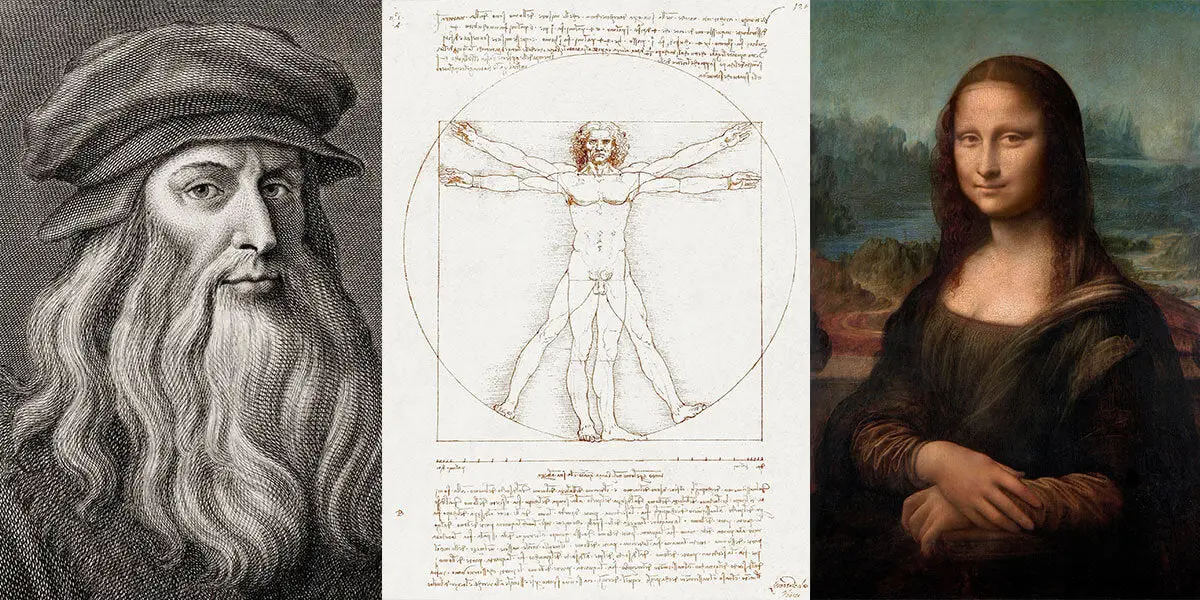
Leonardo Da Vinci: He was interested in invention, drawing, sculpture, architecture, science, music, mathematics, engineering, literature, anatomy, geology, astronomy, botany, palaeontology, cartography and philosophy. He is famous for painting the Mona Lisa (acclaimed an unfinished MASTERPIECE) and is still ‘goated’ by today’s standards.
Hedy Lamarr, an actress (the mother of Wi-Fi) and George Antheill an avant-garde pianist, composer, and author with an interest in engineering: They invented the Bluetooth, WiFi and GPS – all forms of wireless communications. Their inventions helped to navigate missiles despite Nazi jamming attempts.
Benjamin Franklin: A writer, a printer, political philosopher, politician, postmaster, scientist, inventor, humourist, civic activist, statesman, and diplomat. He also happened to be one of America’s Founding Fathers.
Thomas Jefferson: An archaeologist, architect, inventor, politician, palaeontologist agriculturalist, anthropologist, architect, astronomer, diplomat, geographer, inventor, lawyer, mathematician, meteorologist, musician and polyglot amongst others. He lived many lifetimes in a single lifetime
Jonny Kim: Navy SEAL, astronaut, doctor, pilot, mathematician. He is the student with 2 heads African parents asked you about and the friend you don’t want talking about his educational pursuits when your parents are around.
To know more about being a corporate polymath, you can read more here.
To know how to solve the identity dilemma as a polymath click here.
To understand the average struggles of a polymath, click here.
Polymaths make the world go round and these are reasons why you’re important.
Click link to part 2: Mastering Da Vinci Amazing Mindset Part 2