Godsent Ogbebor
Nvidia sets 2026 launch for new AI data centre platform as chip dominance faces fresh tests
Nvidia has unveiled new details of its next generation computing platform for artificial intelligence data centres, signalling how it plans to stay ahead as competition intensifies in the global chip market.
Speaking at the Consumer Electronics Show in Las Vegas, the company said its new platform, known as Vera Rubin, is already in production, with the first systems expected to reach customers in the second half of 2026.
The announcement comes as Nvidia seeks to reinforce its position at the centre of the artificial intelligence boom. The firm’s chips power a large share of the world’s AI data centres, helping to drive its rapid rise in market value over the past year. However, investors and analysts have also raised concerns about growing competition and the risk of an AI investment bubble.
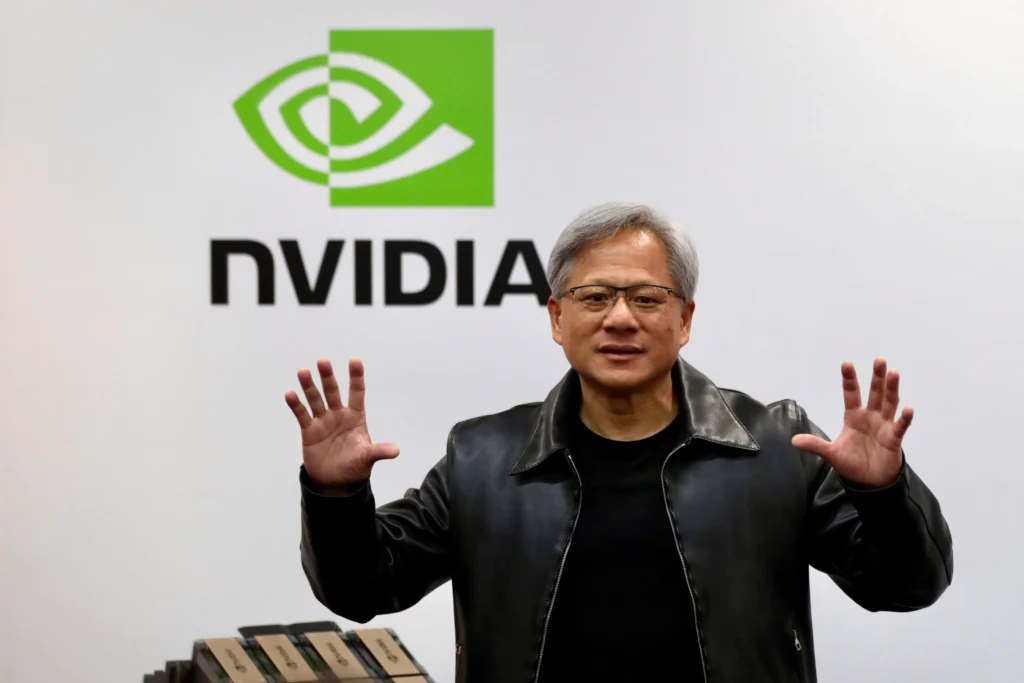
Nvidia’s chief executive, Jensen Huang, said companies are increasingly redirecting money from traditional computing research towards artificial intelligence. He argued that demand for AI infrastructure is being driven by a shift away from simple chatbots towards more advanced systems capable of handling complex, multi step tasks.
Read also: Microsoft to Invest $1M in AI Skills Training for One Million Nigerians
According to Nvidia, the Vera Rubin platform is designed to address emerging bottlenecks in AI performance, particularly the challenge of managing and storing large volumes of contextual data. The company claims its forthcoming server rack, Vera Rubin NVL72, will offer unprecedented data bandwidth for AI workloads.
Industry partners including major cloud providers such as Microsoft, Amazon Web Services and Google Cloud are expected to be among the first to deploy the new technology. Hardware makers and AI research labs are also likely to integrate the platform into future data centre designs.
Despite the optimism, Nvidia faces mounting pressure. Rival chipmakers are accelerating efforts to challenge its dominance, while leading technology firms are investing in their own in house processors to reduce dependence on Nvidia’s hardware. Analysts say the company must continue to innovate quickly to justify the scale of spending currently flowing into AI infrastructure.
For Nvidia, the success of Vera Rubin may prove critical in convincing customers and investors that its technology remains essential as artificial intelligence becomes more advanced and more deeply embedded across industries.