By Shalom Ikuvbogie
Oil Output Falls Short, 2025 Budget Faces Revenue Pressure
The Federal Government’s 2025 budget may be heading into rough waters as Nigeria’s crude oil output continues to lag behind projections for the first half of the year.
Production numbers released by the Nigerian Upstream Petroleum Regulatory Commission (NUPRC) reveal that oil output consistently fell short of the 2.06 million barrels per day (bpd) benchmark used to frame the budget. Instead, monthly production hovered between 1.6 and 1.73 million bpd from January to June.
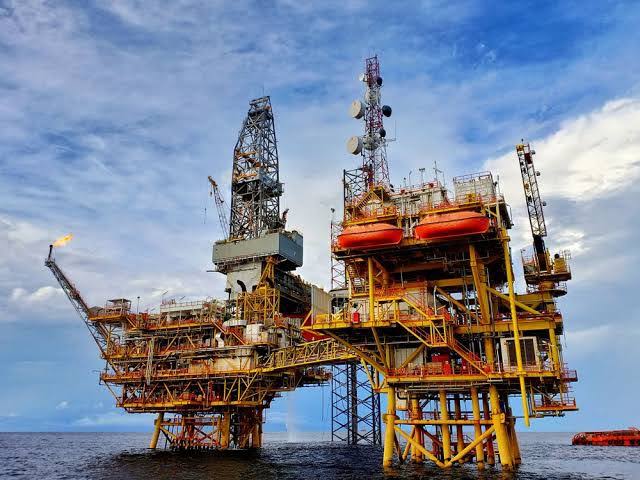
Nigeria’s crude oil output continues to lag behind projections for the first half of the year
This underperformance, coupled with lower-than-expected oil prices, has weakened hopes of achieving the revenue targets set in the 2025 appropriation. While the budget assumed oil would sell at $75 per barrel, Nigeria’s Bonny Light crude averaged just $71.73 in June. The highest price recorded in the first half was $80.14 in January, with a low of $64.55 in May, according to data from OPEC.
Read Also: Tinubu Signs Historic ₦54.99 Trillion 2025 Budget into Law
Industry experts and analysts are now raising concerns that the rest of the year may not offer much relief. Professor Wumi Iledare, a petroleum economist, believes the original budget assumptions were far too optimistic. “I warned at the time that the figures were unrealistic. Oil prices will rise, but not consistently enough to provide stability,” he said.
Vahyala Kwaga, Head of Research at BudgIT, pointed out that oil production struggles are rooted in longstanding issues — poor maintenance, theft, and low investment. “Even if prices improve, our inability to produce enough oil means revenues will still fall short,” he said.
Kwaga further warned that if the government continues to miss its targets, the budget deficit will widen. “This reduces available funds for key services unless the government either borrows more, cuts spending, or boosts non-oil income,” he added.
For the Lagos Chamber of Commerce and Industry (LCCI), the broader concern is structural. Dr. Chinyere Almona, Director General of the chamber, noted that the failure to hit production targets is tied to deeper issues like vandalism, weak investment, and policy delays. “Unless bold steps are taken to address these, reaching the 2.06 million bpd mark in the second half of 2025 will remain a tall order,” she warned.
Almona added that while oil prices have shown signs of recovery, they remain volatile due to global tensions and shifting trade policies. “We might see improvement in the coming months, but there are too many risks still hanging in the air,” she said.
With the exchange rate also under pressure and oil revenue slipping, many believe the government must act fast to close the gap between its budget goals and reality. The second half of the year may offer little room for missteps.