
Godsent Ogbebor – Nigeria Correspondence
BLACK AI FEST 2025: Where Black Creativity Meets Artificial Intelligence
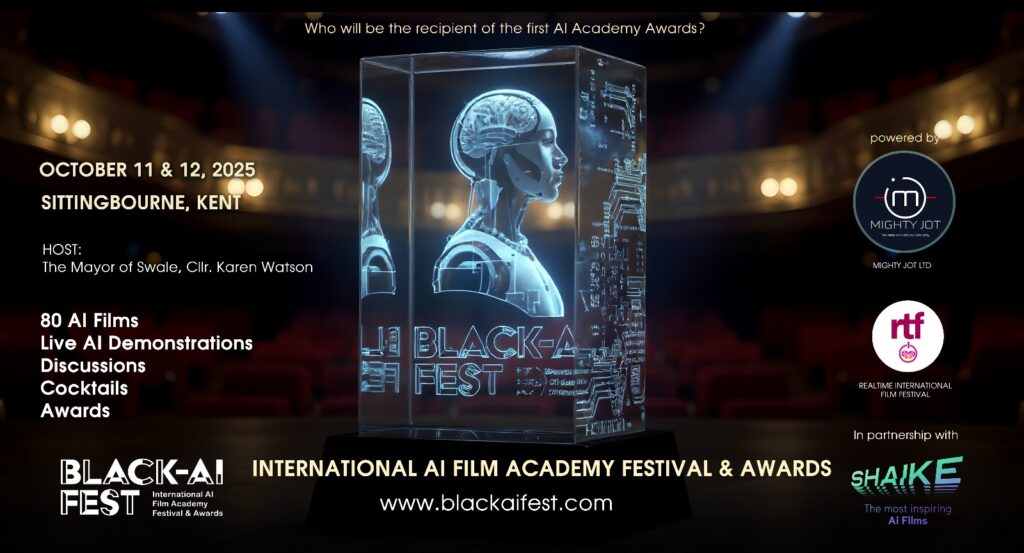
Sittingbourne is preparing for a creative storm that is much more than a conversation about technology. For two days in October, during Black History Month, artists, filmmakers, and thinkers from around the world will gather to explore one question that could reshape the future of storytelling: what happens when Black creators take control of Artificial Intelligence to tell their own stories?
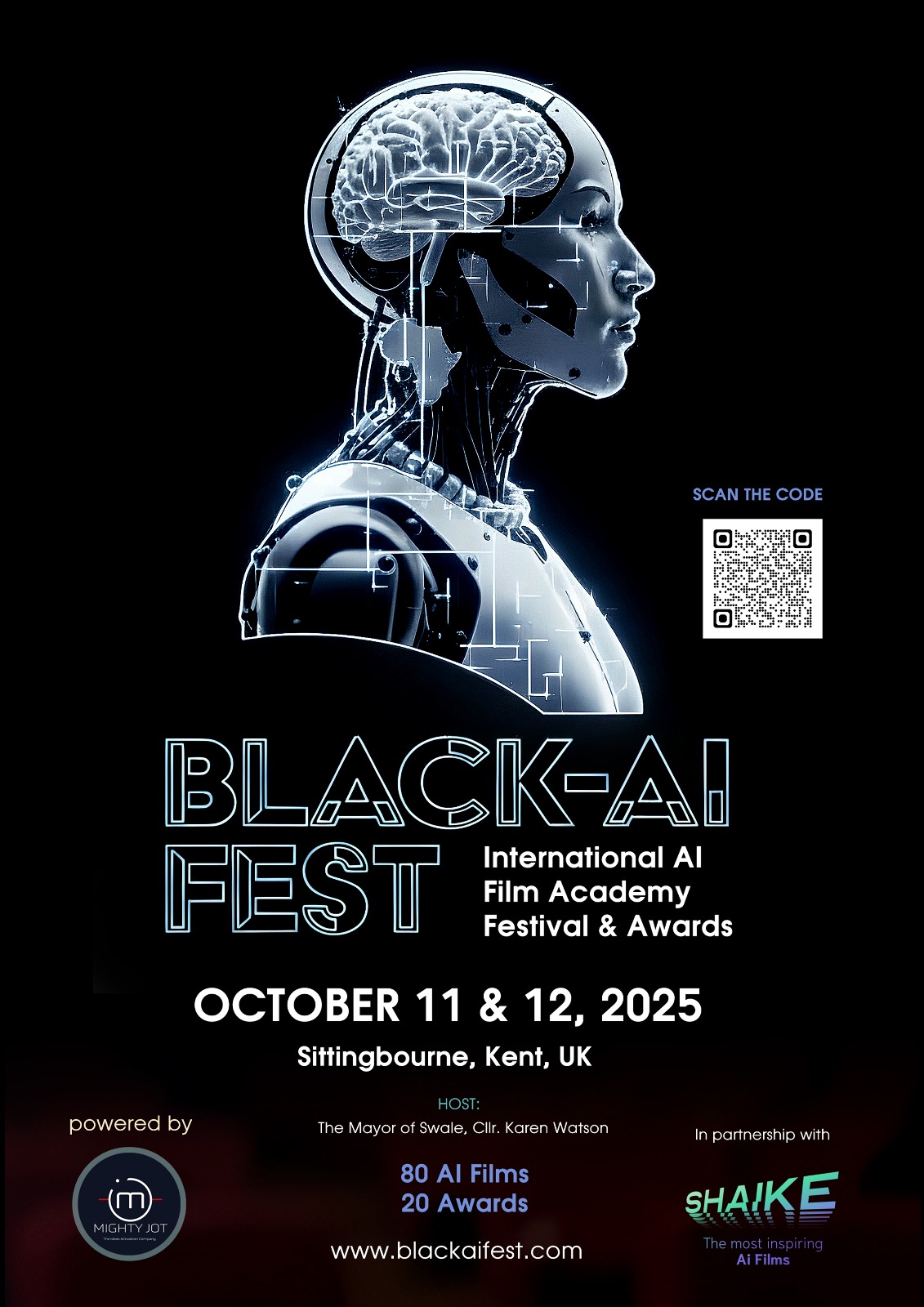
The event, known as the BLACK AI FEST, International AI Film Academy Festival & Awards, will hold its first full edition in Kent, United Kingdom, on October 11 and 12, 2025. It comes after a teaser edition in Worcester earlier this year and now promises to be one of the most daring cultural experiments of its kind merging art, identity, and technology in one stage.
The festival is organized by Mighty Jot Ltd, curated by Stanley Ohikhuare, the celebrated producer behind the Realtime International Film Festival (RTF), and supported by partners such as SHAIKE.ai, UNIVERSai Studios, Film Resolve, and CFI Collective Europe.
According to its official website, www.blackaifest.com, and its press contact blackaifest@gmail.com, the event’s purpose is clear and it is to celebrate human enhanced creativity not replaced by artificial intelligence.
But beneath the glamour and global attention, this event carries heavier meaning. It’s about reclaiming agency in a world where Black artists have too often been underrepresented in the technology shaping our media. The timing is deliberate. By situating the festival within Black History Month, organisers are sending a message that innovation must not only include Black voices but be shaped by them.
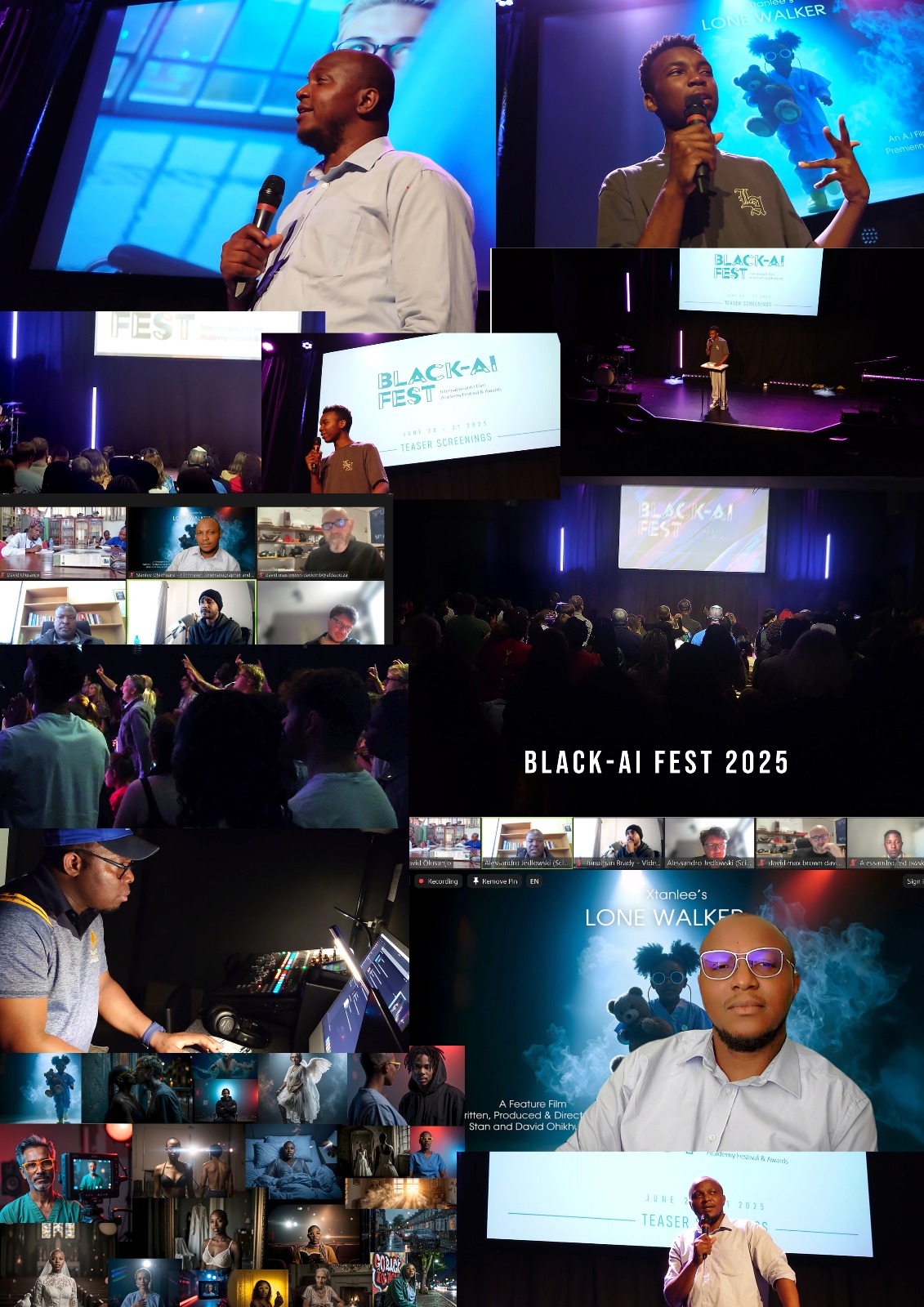
At the heart of the festival is its theme, “RAVEN.” It symbolizes intelligence, transformation, and storytelling; a nod to both ancestral myth and futuristic imagination. The event’s program spans screenings, live performances, interactive AI sessions, and awards across 20 categories, from Best AI Short Film to Best Junior AI Creative for children aged 5–17. Every submission must show proof of AI use as this is a requirement meant to ensure authenticity in a space where imitation can easily masquerade as innovation.
The BLACK AI FEST is not just a celebration. It’s a challenge to filmmakers, technologists, and audiences alike to think critically about who gets to use the tools of the future, and what kind of stories they tell. As the organisers explained, Kent’s Swale Borough Council, led by Mayor Karen Watson, is supporting the event by providing access to venues like The Avenue Theatre and Loveworld SK Auditorium for screenings and ceremonies.
Day One opens with the festival’s grand ceremony at The Avenue Theatre before moving to Loveworld SK Auditorium for additional screenings, closing the evening with the “Swinging in the ‘60s” performance at 7:30 p.m. On Day Two, participants will engage in a live AI exchange and training session, followed by the announcement of the UNIVERSai AI Film Academy in Kent, a potential turning point for future creatives.
As anticipation builds, here are Five Things to Watch at Black AI Fest 2025 that make this event more than just another film gathering:
- The first major AI film premiere led by Black creatives in the UK, blending culture and code.
- The launch of the UNIVERSai AI Film Academy, expected to create training pathways and mentorships for global filmmakers.
- The Junior Creatives Showcase, where children aged 5-17 will debut AI-powered storytelling projects.
- The Interactive AI Training Session, giving artists hands-on experience with real AI production tools.
- And perhaps most importantly, the conversation on ethics and ownership, as the industry navigates how to protect human creativity in the age of algorithms.
Beyond the festivities, deeper questions remain. Who owns a film generated by machine learning tools trained on copyrighted data? How do we protect creators’ rights when AI blurs the lines between originality and automation? For many independent filmmakers, these are not abstract worries they determine whether a career can survive in an era of digital cloning.
The festival’s verification policy, requiring entrants to show proof of AI use through screenshots or process videos, may seem practical, but it also exposes a gap between creators with advanced equipment and those in under-resourced communities. This raises an important question: can true inclusion exist when access to tools remains uneven?
The organisers insist that the training sessions and the proposed AI Film Academy are designed to close this gap by providing education and access to affordable tools. If successful, they could offer a real bridge between innovation and equity. But that vision will depend on how accessible these programs become after the festival lights fade.
There is also the ethical tension that shadows every AI innovation. While these tools can democratize filmmaking, they can also manipulate reality. The rise of deepfakes and synthetic media has already shown how easily truth can be distorted. For a festival rooted in authenticity, the challenge will be to balance creative freedom with responsibility. Organisers may need to set strong guidelines around consent, data sourcing, and the moral implications of using real human likenesses in digital work.
Legally, the boundaries remain blurred. If a filmmaker creates an AI-generated scene inspired by famous works or using existing datasets, who owns it? The law has not yet caught up. A credible academy should therefore not only teach the art of AI filmmaking but also offer clear guidance on intellectual property rights, so creators understand how to protect their stories in a fast-evolving legal landscape.
Labour is another question lurking beneath the celebration. AI can reduce production time and cost, but it can also replace human work. Will this innovation create opportunities for marginalized filmmakers or quietly erase traditional creative roles? A festival that hopes to redefine the industry must also defend the dignity of the people who have built it, that includes; editors, cinematographers, and sound engineers whose livelihoods may be affected by automation.
Still, the potential for empowerment cannot be ignored. For decades, Black filmmakers have battled financial and structural barriers. AI could break some of those walls, giving young storytellers in Lagos, Kingston, or Birmingham the ability to bring big ideas to life without million-dollar budgets. With guidance, transparency, and proper mentorship, this technology could open the stage for more inclusive, global storytelling.
Representation remains the heartbeat of the festival. It is not just a gathering of creatives, but an assertion that Black innovation belongs at the centre of global tech culture, not on its margins. The organisers’ partnerships with companies like UNIVERSai Studios and SHAIKE.ai show an intent to build creative alliances that merge storytelling with science but those partnerships must be built on transparency, community benefit, and genuine collaboration, not tokenism.
Observers are particularly watching the announcement of the UNIVERSai AI Film Academy, which could either become a hub of opportunity or a closed circle for the elite. The hope is that it provides scholarships, open labs, and accessible training that uplifts creators from all backgrounds.
The involvement of local government in Kent is also important. The support of Swale Borough Council ensures the festival is not just parachuting into a community but rooted in it. If organisers connect with local schools, creative groups, and media students, the legacy could outlive the event itself, leaving behind knowledge, infrastructure, and opportunity.
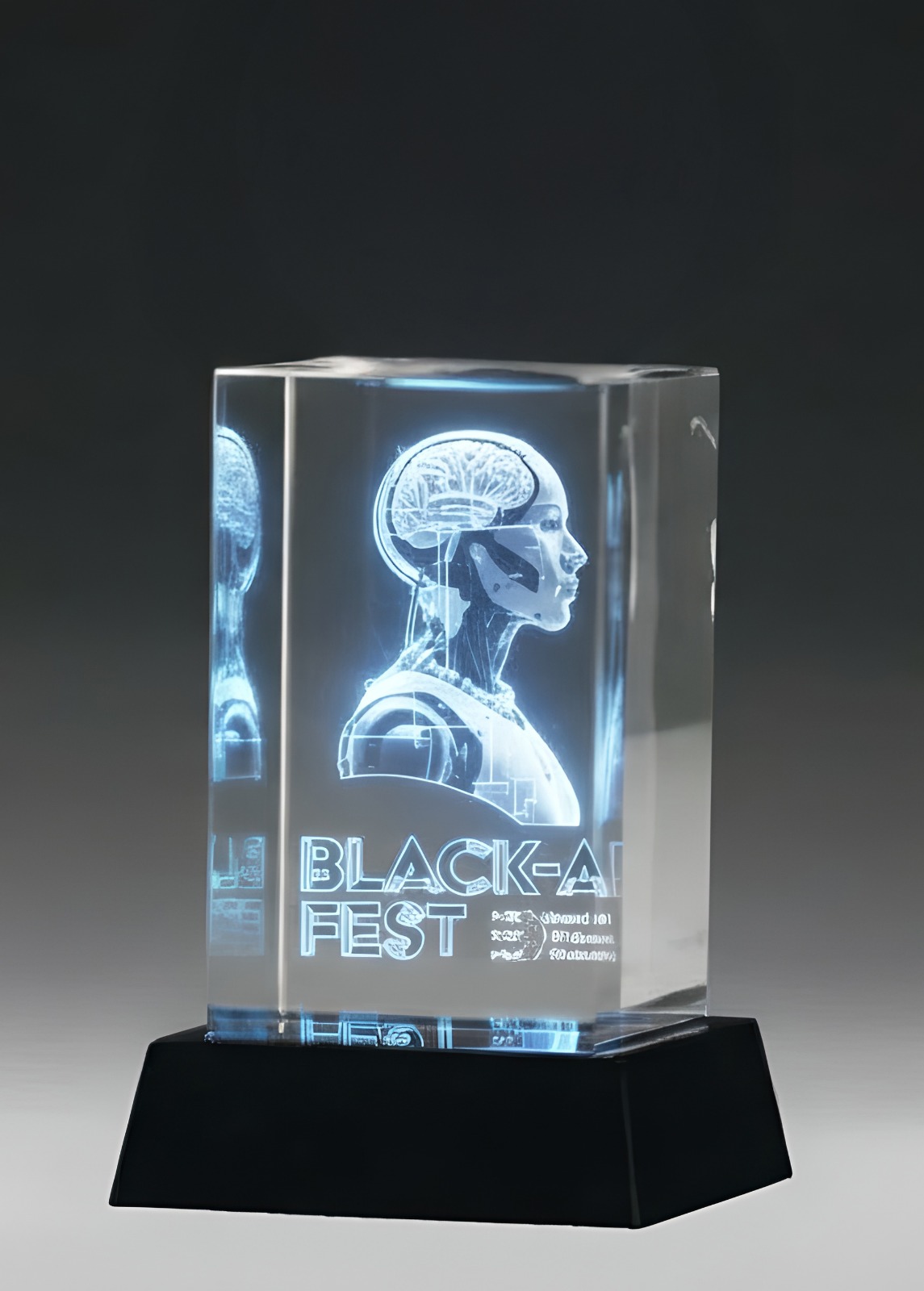
The award list is ambitious, covering films, documentaries, comic books, and screenplays. By recognising everything from full AI works to hybrid productions, the festival makes a bold statement: storytelling is evolving, and it is time to define what creativity means in this new age. But for awards to carry real value, the judging process must be transparent, fair, and informed by experts beyond the entertainment world; ethicists, cultural historians, and digital rights advocates should be at the table too.
For all its uncertainties, BLACK AI FEST 2025 captures something profound: a hunger to reclaim creative tools and reshape narratives on Black terms. For generations, Black artists have turned constraint into innovation. Now, they stand on the edge of another frontier; one where code, imagination, and identity meet.
As submissions remain open globally, and the countdown to October begins, the real test of this festival will not be in the ceremonies or red carpets, but in what it builds afterward. Will it truly educate, empower, and protect artists? Will it publish its standards and make its process transparent? Will it keep its promise to centre representation, not just rhetoric?
Those answers will determine whether BLACK AI FEST becomes another passing trend or a genuine turning point in creative history.

