
EXPOSED: America’s Secret Plan to Control Nigeria’s Population, Oil, and Future and how the Government may be Helping Execute It
America’s relationship with Nigeria has never been a simple one, it has always been about more than diplomacy or goodwill. Beneath the surface, U.S. policymakers have treated Nigeria not just as a partner but as a variable to be managed, a set of numbers on a chart that could either stabilize or disrupt the global system. The most revealing evidence of this comes from a secret memorandum written in 1974, known as National Security Study Memorandum 200, or the Kissinger Report. It was drafted at a time when oil prices had skyrocketed, when Western economies were reeling from inflation and recession, and when newly independent nations across Africa were asserting sovereignty over their resources.
The report identified rapid population growth in countries like Nigeria as a direct threat to American access to food, fuel, and strategic minerals. Its recommendation was blunt: reduce fertility in key nations, use aid as leverage, anticipate resistance from religion or culture, and frame it all as development policy. Population control, the memo concluded, was not merely a matter of health but of national security.
From the start, Nigeria was at the heart of this plan as it was not just another developing country; it was a nation with vast oil reserves, an expanding population, and influence across Africa. For U.S. strategists, that combination was dangerous. More people meant greater domestic demand for food and fuel, which in turn meant higher prices and less oil available for export. More people also meant stronger nationalist politics and more pressure on the government to demand fairer terms from foreign corporations. As the Kissinger Report framed it, Nigeria’s growth had to be managed.
The archival record in the Foreign Relations of the United States series confirms that this was not speculation but policy. As Document 200 shows, American officials in 1973 were already worried about Nigeria’s growing independence. The Bureau of Intelligence and Research noted that relations were deteriorating not because of any one dispute but because Nigerians felt the U.S. was indifferent to their aspirations. American officials, in turn, dismissed Nigeria’s cautious approach as inefficiency.
The result was mistrust on both sides. Document 201, written in September 1973, even suggested that Nigeria deliberately complicated a planned meeting between President Nixon and General Gowon to enhance its leverage. When the meeting collapsed, Document 203 recorded how Nigerian hawks used the snub to harden attitudes against the U.S. These early records confirm that Washington saw Nigeria’s assertiveness not as normal politics but as something to be contained.
Read also:
Loud and Wrong: The Art of Confident Misinformation
Social Media Is Becoming Less Social and More Media
From Etisalat to 9mobile, Now to T2 – What’s Next?
Regina Daniels: Love Story or a Slow Awakening?
By March 1974, when the Kissinger Report was drafted, the U.S. was already exploring how to tie Nigeria closer to its orbit. Document 204 laid out strategies to influence Nigeria through aid and engagement. Later that year, Document 205 captured a conversation between Henry Kissinger and Nigerian Foreign Minister Arikpo, reflecting Washington’s attempts to balance engagement with suspicion. Document 206, in January 1975, warned bluntly that Nigeria might restrict U.S. oil access if tensions continued, showing how central crude was to American calculations.
Document 207 proposed specific measures: setting up commissions, hosting business forums, and arranging high-level visits to draw Nigeria into predictable cooperation. Kissinger’s handwritten comments on that memo reveal the delicate act he was willing to engage but only on terms that preserved American advantage. Document 208, written after a Nigerian coup in 1975, advised caution in political dealings but still encouraged a commercial mission, proving that oil and business were never to be neglected.
The clearest example of America’s strategy to restrain Nigeria appears in Document 209, a Treasury memo from January 1976. It recommended that the U.S. oppose World Bank loans to Nigeria on the grounds that oil revenues made such loans unnecessary. In reality, the intent was to limit Nigeria’s independence in global finance. Kissinger himself pushed back slightly in Document 211, urging that cutting loans too sharply would damage relations. But the underlying logic remained: Nigeria was too rich in oil to be allowed the same financial support as others. This was a way of disciplining the country, ensuring it did not become too powerful.
Document 210, after a failed coup in February 1976, recommended a posture of reassurance and “business as usual,” demonstrating the consistency of American tactics: never panic, never overreact, but always keep Nigeria within the frame of control. The last series of documents, from 212 to 216, reveal the diplomatic dance of cancelled visits and mutual suspicion. Nigeria first hinted at normalizing relations but later rejected Kissinger’s trips outright, leaving the Americans frustrated. Through it all, one thing was clear: Washington would persist, using aid, oil, loans, and diplomacy to shape Nigeria’s choices.
These records form the historical backdrop to the Kissinger Report’s blunt message: Nigeria’s population, oil, and sovereignty were problems to be managed for U.S. benefit. And if we fast forward to the present, the continuity is striking. Structural Adjustment Programs in the 1980s forced Nigeria to devalue its currency, remove subsidies, privatize industries, and open its markets. These measures were hailed as modernization but left millions poorer, schools and hospitals weakened, and dependency on imports deeper.
Oil continued to be exported as crude and imported as refined fuel, enriching foreign companies while draining Nigerian resources. Family planning campaigns, often supported by donor funding, expanded access to contraception but also limited real choice, with rural women frequently offered only what donors supplied in bulk. Security partnerships grew in the 2000s, with U.S. equipment, training, and intelligence shaping Nigeria’s counterinsurgency operations. At every stage, the Kissinger template was visible: manage the numbers, shape the economy, secure the oil.
This pattern is not only historical; it is alive in the policies of today. President Bola Ahmed Tinubu came into office with bold announcements. Subsidies were removed, the naira was floated, and preparations began for a digital census and ID system. International creditors and investors applauded these steps as courageous. But for Nigerians, the impact was immediate and painful. Fuel costs doubled overnight, transport fares soared, and food prices climbed. A tricycle rider in Benin City explained that his fuel bill had jumped by half, yet he could not raise fares because his passengers were also struggling.
A rice trader in Kano saw the price of imported rice skyrocket with the currency depreciation, which in turn pushed up the price of local rice. Customers reduced their purchases to tiny measures, and her profit margins shrank. A teacher in Enugu watched her salary lose value by the week, while parent-teacher levies rose to cover gaps in school funding. A farmer in Taraba paid more for fertilizer, diesel, and transport, while middlemen pressed him harder on prices. These stories are not statistics; they are the human cost of reforms that mirror, almost word for word, the prescriptions of the 1980s and the logic of the 1970s.
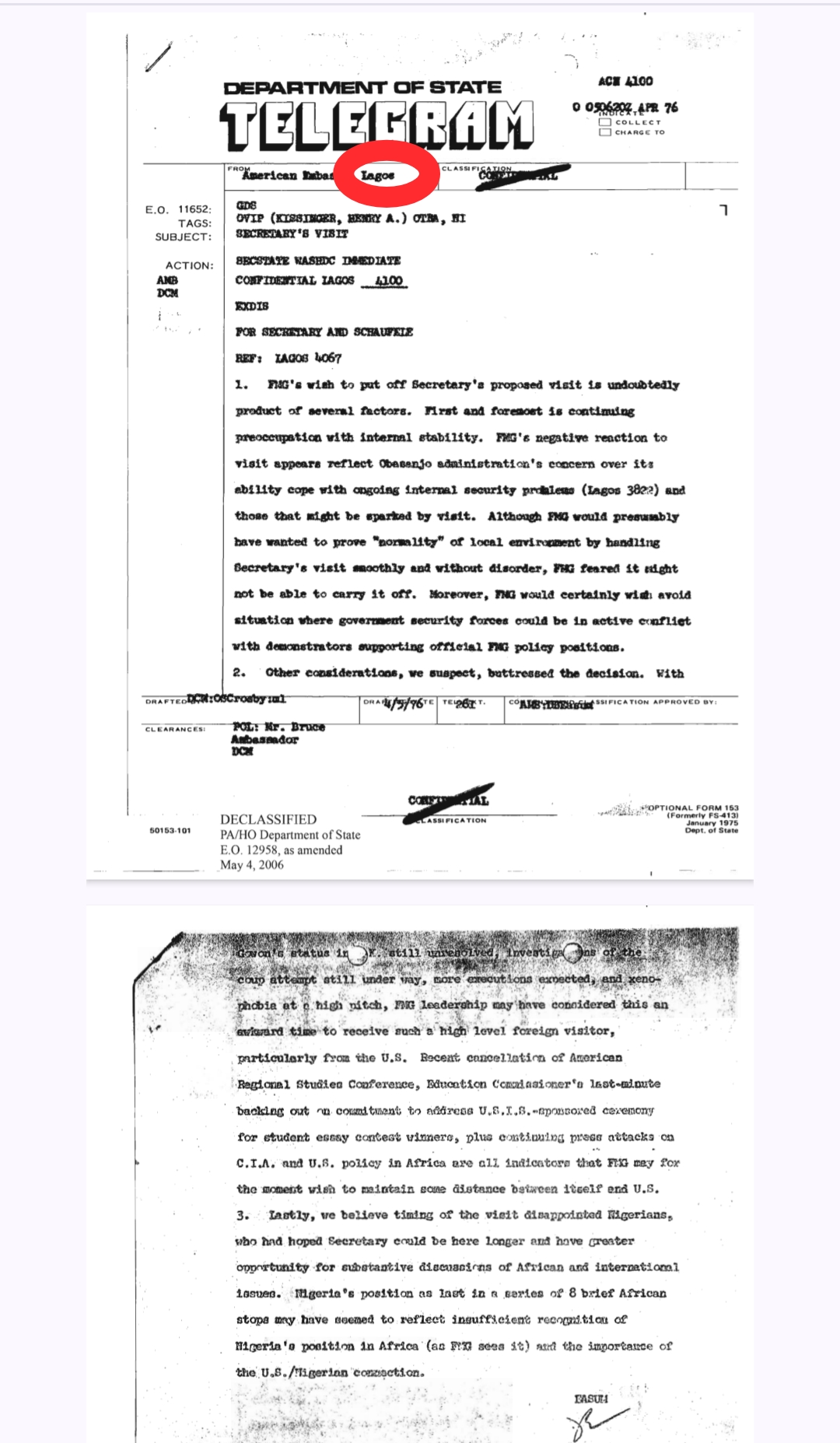
Photo proof one (1) to back up this investigative report
The digital census adds another layer. On paper, it is a modern tool for planning counting everyone fairly, distributing resources, and strengthening governance. But Nigerians know the history. They know that in 1974, the U.S. described Nigeria’s growing population as a threat to its access to oil.
They know that population programs were tied to aid and loans. In clinics today, women still find that the contraception on offer is shaped more by donor shipments than by informed choice. A midwife in the southwest put it clearly: when implants are funded, implants are available, even if a woman prefers pills or injectables. Choice, she said, exists in rhetoric but is limited in practice. The echoes of the Kissinger Report are still loud.
Tinubu’s reforms, therefore, cannot be understood in isolation. They fit into a much longer story of external influence and internal compliance. The harshest critics argue that his government is completing what Kissinger set in motion: constraining domestic consumption by raising prices, disciplining the currency, tying population programs to donor agendas, and keeping oil exports stable for foreign markets. Supporters respond that these are necessary measures to restore fiscal sanity, attract investment, and prevent economic collapse. Both perspectives contain truth. But the question that matters most is one of agency: are these reforms chosen freely by Nigerians for Nigerians, or are they the continuation of a blueprint written in Washington fifty years ago?
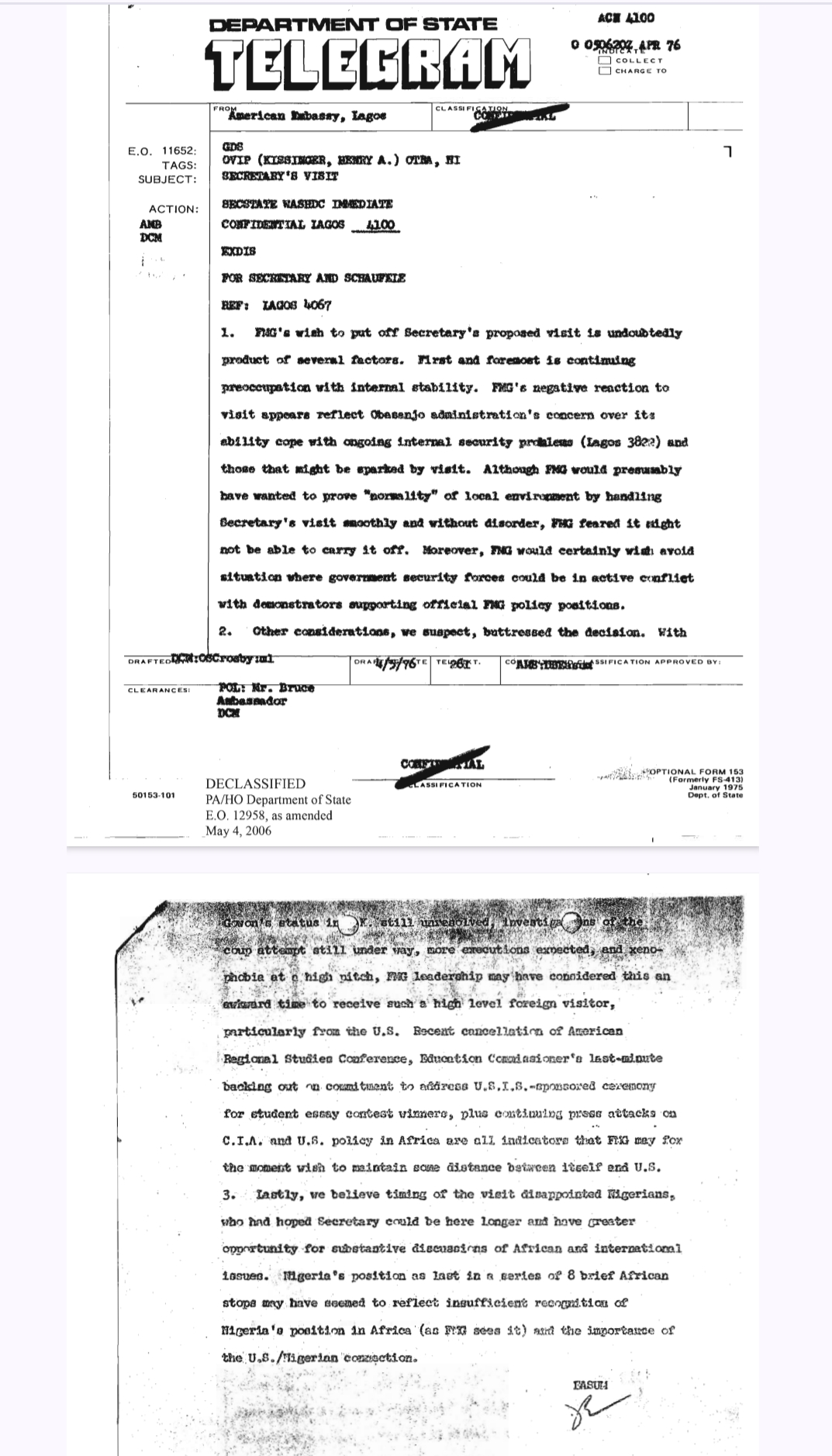
Photo proof two (2) to back up this investigative report
As Document 200 revealed, the U.S. never truly saw Nigeria as an equal partner. It saw it as a country whose ambitions needed to be managed. As Document 209 demonstrated, financial tools like World Bank loans were used to discipline Nigeria’s independence. As Document 210 confirmed, even after coups and instability, the U.S. insisted on business as usual so long as oil flowed and population programs continued. These are not relics of the past; they are foundations of a strategy that endures. Tinubu’s policies, intentionally or not, fall neatly into this template.
The Nigerian people, however, are not numbers on a chart. They are market women in Lagos balancing rising transport costs, teachers in Enugu struggling against inflation, farmers in Taraba trying to keep their families afloat, and young people in Abuja building startups in music and technology despite poor infrastructure. They are resilient, creative, and resourceful. The tragedy is that for decades, their energy has been framed as a problem rather than a possibility. The Kissinger Report saw population as a threat. The FRUS documents saw Nigeria’s sovereignty as a risk. Today’s reforms, while justified as modernization, too often feel like the same old discipline under a new name.
The continuity is undeniable as America’s secret plan to control Nigeria’s population, oil, and future was laid out in memos and telegrams in the 1970s. It was implemented through adjustment programs in the 1980s, donor-driven health campaigns in the 1990s and 2000s, and security partnerships in the 2010s. And now, under Tinubu, it is being completed through subsidy removal, currency float, digital census, and population management programs. The question for Nigeria is whether this cycle will continue indefinitely or whether a new path will finally be chosen, one in which population is seen as a resource, oil as a tool for domestic growth, and sovereignty as non-negotiable.
As Document 212 records, Nigeria abruptly cancelled Kissinger’s planned visit in April 1976, citing security reasons but clearly signaling political distrust. The cancellation was more than a scheduling issue, it reflected Nigeria’s deep suspicion of American motives. By then, the U.S. had already tied its Nigeria strategy to oil flows and population control. Kissinger himself, as Document 213 shows, sought to soften Nigerian skepticism with carefully crafted speeches. Yet the embassy noted that Nigerians continued to believe American policies were not about partnership but about self-interest.
This distrust came to a head in Document 215, when Nigeria outright rejected another Kissinger visit in September 1976. The Americans described the decision as rooted in “xenophobia” and nationalist pride. Document 216, from Tanzania, reported Kissinger’s frustration, admitting it was impossible to portray relations with Nigeria as “normal” after repeated rejections. What these records show is that the U.S. understood Nigeria’s independence but never stopped pressing for influence. Even rejection did not end the effort; it only reshaped the tactics.
If we place these documents alongside NSSM 200, the continuity is clear; the memorandum argued that Nigeria’s population growth and oil wealth were dangerous variables for U.S. interests. The diplomatic cables and memos of the 1970s show how that logic was applied in practice through financial pressure, selective aid, and persistent engagement. Aid was tied to family planning programs, loans were withheld to discipline independence, and diplomacy was framed as reassurance but aimed at control. This was the real architecture of U.S. policy: treat people as numbers, oil as leverage, and sovereignty as negotiable.
The Nigerian experience in the decades that followed bears the imprint of this architecture and structural Adjustment Programs in the 1980s followed the same prescriptions discussed in Document 209 reduce subsidies, open markets, limit state intervention. The result was devaluation of the naira, removal of fuel and food subsidies, privatization of state assets, and dependence on imported goods. Economists praised these measures as reforms, but ordinary Nigerians experienced them as hardship. Real wages fell, schools and hospitals declined, and poverty deepened. The same cycle repeated again and again: policy measures designed to please international creditors but leaving citizens worse off.
Family planning programs also carried this dual legacy and on one hand, they brought genuine benefits reducing maternal mortality, expanding access to contraception, and empowering women with more choices. On the other hand, they were shaped by donor priorities rather than local preferences. Rural women often found themselves offered only implants or injectables because those were the commodities supplied in bulk.
A health worker in a northern state explained that when women complained of side effects, switching methods was difficult because alternatives were simply not available. This was not a failure of medicine but of policy choice narrowed by external supply chains. It was exactly the kind of instrumentalization predicted in NSSM 200, where population control was framed as development but served strategic goals.
Oil, the lifeblood of Nigeria’s economy, also reflects this continuity and for decades, Nigeria exported crude and imported refined fuel, a cycle that drained resources and enriched external interests. The lack of domestic refining capacity was not accidental. It was the product of political choices, vested interests, and a global system that profited when Nigeria remained dependent. The Kissinger-era memos treated Nigerian oil as a stabilizer of global markets before it was ever considered a foundation for Nigerian development. That logic persists today, where refineries remain stalled, modular projects struggle, and imports continue. Oil is a blessing for revenue but a bind for sovereignty.
Security partnerships add another layer since the rise of insurgencies and terrorism, Nigeria has relied heavily on training, equipment, and intelligence from the U.S. and other partners. These measures have saved lives and strengthened certain capacities. But they also bind Nigeria more tightly into external networks of influence. Security budgets grow while development spending lags. Drones, rifles, and patrols multiply, but schools and clinics often remain closed. As the FRUS documents show, American concern was always about stability for oil and strategy, not human security for Nigerians. That imbalance continues.
Nowhere is the continuity more visible than in the reforms of President Tinubu which is the removal of subsidies, the floating of the currency, and the push for digital census and ID systems all echo the prescriptions of the past. Economists argue that subsidies were distortionary, that the naira peg was unsustainable, and that accurate data is necessary for planning.
These arguments have merit. But the way these measures were implemented swiftly, simultaneously, and without adequate safety nets made ordinary Nigerians bear the heaviest costs. A tricycle rider in Benin City now works longer hours for less income, a rice trader in Kano shifts from bulk sales to sachets because customers cannot afford more, a teacher in Enugu sees her salary eroded by inflation while school levies rise, a farmer in Taraba pays more for fertilizer and transport but earns less from his crops. These are the human faces of reform. They are the same faces that bore the cost of adjustment programs in the 1980s and 1990s.
The digital census, hailed as modernization, revives old fears, communities ask who will hold the data, how it will be used, and whether it will be another tool for control. They remember that in 1974, population was described as a threat to U.S. access to oil, however, they know that donors shape family planning programs by what they supply, not what women request. A midwife in the southwest explained that when implants are funded, implants are available, even if women ask for alternatives. This is the practical reality of donor influence. The rhetoric is empowerment, but the effect is limitation.
Tinubu’s policies, then, are not merely Nigerian choices in isolation as they sit squarely within a historical template built by American strategy. As Document 200 showed, the U.S. never saw Nigeria as an equal, it saw it as a country to be managed. It is revealed that Document 209 demonstrated, financial tools like World Bank loans were used to discipline independence. As Document 210 confirmed, even after coups, the U.S. insisted on business as usual so long as oil flowed. And as Documents 212 to 216 revealed, even outright rejection of American visits did not end the effort, it only changed the tactics. Today, the tactics look like subsidy removal, currency float, and census modernization. The continuity is unmistakable.
What this means is that Tinubu’s reforms, whatever their intent, help to complete a project that began decades ago by raising domestic costs, they discipline consumption also by floating the currency, they align Nigeria with international financial expectations, by pushing a digital census, they create population data that can be used for both planning and leverage, by continuing donor-driven family planning programs, they entrench external influence over reproductive health. By keeping oil exports steady while refineries lag, they sustain global supply chains at Nigeria’s expense. Each of these measures can be defended on technical grounds. But taken together, they fulfill the logic of NSSM 200: control the numbers, shape the economy, secure the oil.
The Nigerian people deserve more than this, they are not variables in a foreign equation, they are citizens with agency, culture, and aspirations, they are young people in Lagos building tech startups despite unreliable power, they are musicians and filmmakers in Abuja and other parts in the nation reshaping Africa’s cultural economy; they are farmers, traders, teachers, health workers, and families who endure hardship but remain resilient. The tragedy is that for too long, their resilience has been framed as a problem rather than a possibility. The Kissinger Report saw population as a threat and the FRUS documents saw sovereignty as a risk. However, Tinubu’s reforms, for many, feel like a continuation of that mindset.
But history is not destiny, Nigeria can choose differently and can invest in refining capacity, rebuild rural roads, and support local manufacturing. It can negotiate partnerships that prioritize technology transfer and domestic capacity rather than extraction. It can design safety nets that are real, not rhetorical, cushioning families from the pain of reform. It can insist on method mix in family planning programs, ensuring real choice for women. It can enforce data protection laws so that digital census information serves citizens, not strategies. These are not radical demands; they are sovereign common sense.
The lesson of the documents is that America’s plan was deliberate, persistent, and adaptable as it was written in 1974, applied through diplomacy, enforced through loans, reinforced through adjustment, and sustained through aid.
The documents are striking not only for what they say but for the tone in which they say it. Now let me elaboarte on these Documents from another perspective I have established before, the reason for this is to show how deeply connected my assertions are with plausible proofs. As Document 200 shows, U.S. analysts described Nigerians not as partners but as actors with “misperceptions” that needed to be managed. The very language implied that Nigerian suspicions of U.S. indifference were irrational, rather than grounded in experience. Yet the suspicions were correct. America’s priority was never Nigeria’s development but the steady flow of oil and the containment of population growth.
Document 201 highlights this mindset further, when U.S. officials suggested that Nigeria had deliberately stalled a Nixon-Gowon meeting to gain leverage, it revealed how Washington framed Nigerian assertiveness as manipulation. To Nigerian leaders, insisting on respect and careful timing was part of sovereignty. To U.S. officials, it was a tactic to be countered. The interpretation gap was enormous, but it was always resolved in Washington’s favor.
Document 203 makes this explicit. Nigerian hawks, emboldened by what they saw as American indifference, hardened their nationalist rhetoric. Instead of recognizing this as a natural response to foreign arrogance, U.S. officials described it as hostility. This framing justified a strategy of containment rather than respect. Nigerians wanted recognition; Americans wanted compliance.
By 1974, this divergence had hardened into policy as document 204 urged strategies to draw Nigeria closer through aid and engagement. But as NSSM 200 shows, the engagement was never neutral. It was always tied to conditions: accept family planning programs, open markets, allow oil flows. Document 205 illustrates this in the Kissinger-Arikpo meeting, where Nigeria was spoken to as a country whose loyalty needed cultivation, not as a sovereign peer. Document 206’s warning that Nigeria might restrict oil access shows just how dependent Washington felt. The fear was not Nigerian poverty or instability but reduced U.S. access to crude.
Document 207 mapped out the softer instruments of control of high-level commissions, business forums, joint programs all framed as partnership but designed to keep Nigeria predictable. Kissinger’s handwritten notes on the memo show the deliberate caution: engage enough to maintain influence but never enough to empower Nigeria beyond control. Document 208, written after the 1975 coup, carried the same logic. Keep political distance, but continue commercial missions. Oil was not negotiable.
Document 209 is perhaps the clearest evidence of discipline as strategy, the U.S. Treasury argued that Nigeria did not need World Bank loans because of its oil revenue. On the surface, this was logic: a wealthy oil country did not need aid. But beneath the surface, it was about leverage. Denying Nigeria access to loans meant limiting its ability to diversify, develop, or act independently in global finance. It was a way of ensuring dependency. Kissinger himself moderated this in Document 211, arguing that total denial would rupture relations but even his moderation was not about respect, it was about maintaining access.
Document 210 demonstrates the consistency of this approach, after a coup attempt, the options considered were condemnation, silence, or reassurance. The recommendation was reassurance to maintain business as usual. The priority was not Nigerian democracy or accountability but continued access to oil and stability in markets. Meanwhile, documents 212 through 216 show how this strategy endured even in the face of open rejection. Nigeria cancelled visits, rejected Kissinger, and signaled distrust. Yet the U.S. persisted, framing Nigerian resistance as xenophobia and the lesson was simple: Nigeria could resist diplomatically, but the structural tools of control aid, loans, oil, and population programs remained in place.
The decades that followed show how these tools shaped Nigerian life. In the 1980s, the SAP era brought sudden shocks according to reports as a market woman in Onitsha recalled how the price of rice doubled within months of the naira devaluation. Her customers shifted from buying bowls to buying cups. She sold less, earned less, and her children ate less.
A factory worker in Kaduna lost his job when his textile plant closed under the pressure of cheap imports. He joined the swelling informal sector, selling small goods in markets but never earning enough to replace his wage. These were not isolated stories; they were nationwide experiences, they were the lived outcomes of policies designed to satisfy creditors, not citizens.
In the 1990s, donor aid became the main channel of influence as family planning programs multiplied, with glossy campaigns in cities and rural outreach programs. According to reports, women in Abuja appreciated the new access but women in Katsina often found that when they wanted pills, they were offered only injectables and when they wanted condoms, clinics said they were out of stock. The pipeline of supplies was controlled not by their preferences but by donor priorities. A nurse explained that their success was measured by how many implants they distributed, not how many women found the method that worked best for them, this was not empowerment; it was numeric target achievement, the echo of NSSM 200 was unmistakable.
The 2000s brought new layers and oil prices boomed, enriching the state but deepening dependency and yet, in the Niger Delta, communities saw billions of dollars leave while their rivers and farms were poisoned. Militancy rose, and the government responded with force and international oil companies profited, foreign refineries thrived, but local people suffered. Security partnerships grew as the U.S. trained and equipped Nigerian forces. Yet the balance tilted again toward state security rather than human security, schools stayed closed while military budgets grew, health clinics went without drugs while armored vehicles were purchased. This was the same logic as in Document 210 stability defined as control, not as dignity for citizens.
The 2010s deepened this pattern as Boko Haram’s rise made Nigeria a counterterrorism priority. The U.S. provided intelligence, drones, and training. Some of this saved lives, but it also tied Nigeria’s security architecture to external influence. American companies supplied equipment, American trainers shaped tactics, and American intelligence guided operations. Once again, the focus was on stability for global security, not on rebuilding the schools, clinics, and livelihoods that Nigerians had lost.
Now Tinubu’s era arrives, and the continuity is striking, subsidies are removed, the naira is floated, census modernization is pursued, and family planning programs continue in donor-driven form. The human stories echo those of earlier decades. According to reports, a taxi driver in Lagos explained that his daily fuel cost had doubled since subsidy removal, but his passengers refused to pay higher fares.
His profit collapsed, and he now works longer hours for less income, a market trader in Kano said her customers have shifted from buying measures of rice to handfuls, a teacher in Enugu said her salary buys less each month, and she now borrows to pay school levies, a farmer in Taraba said his fertilizer cost has tripled, while buyers pay less for his maize. These are the same stories told by their parents in the 1980s and 1990s. The difference is that now, reforms are justified not only as modernization but as unavoidable.
Critics argue that Tinubu is executing the blueprint laid out in NSSM 200 and reinforced in Documents 200 through 216. By removing subsidies, he disciplines domestic consumption. By floating the naira, he aligns with creditor expectations. By modernizing census data, he revives the old logic of population as strategy. By allowing donor-driven family planning, he sustains external influence over fertility. By keeping oil exports high while domestic refining lags, he continues Nigeria’s role as crude supplier to the world. Supporters argue that these reforms are necessary to save the economy. But the continuity with U.S. strategy is undeniable.
What is missing in both defenses and critiques is the perspective of Nigerians themselves. For a tricycle rider in Benin City, reforms are not theory; they are hunger, for a rice trader in Kano, reforms are not modernization; they are shrinking profits, for a teacher in Enugu, reforms are not fiscal discipline; they are borrowed money for school fees, for a farmer in Taraba, reforms are not macroeconomic signals; they are rising costs and falling returns. These are the people whose lives are shaped by policies designed decades ago in Washington and executed today in Abuja.
The lesson of the documents is not only that America planned Nigeria’s management, it is that the plan worked by embedding itself in Nigerian policy. By tying aid to family planning, loans to liberalization, and diplomacy to oil flows, the U.S. ensured that Nigeria’s choices always tilted toward external interests. Tinubu’s reforms are the latest expression of this tilt. Whether deliberate or not, they fulfill the old logic: control the numbers, shape the economy, secure the oil.
Nigeria can break this cycle, but it requires deliberate choices like investing in refining capacity so crude is not exported while fuel is imported. Rebuild rural roads so food prices are not inflated by transport costs. Support local manufacturing in textiles, pharmaceuticals, and building materials to reduce import dependency. Fund schools and clinics with transparency so families see real benefits. Ensure family planning programs offer true choice, not donor-driven limits. Protect census data with strong laws so numbers serve Nigerians, not strategies. These are the steps of sovereignty.
Until such steps are taken, the continuity remains and the Kissinger Report saw Nigeria’s population as a threat while the FRUS documents saw Nigerian sovereignty as a problem. Today’s reforms, defended as modernization, too often echo those same assumptions.
However, the headline, then, remains a living reality: America’s secret plan to control Nigeria’s population, oil, and future and how the Government may be helping execute it.