By Chidinma Nwaoji
FG Reverses Mother-Tongue Policy, Adopts English as Sole Teaching Language
The Federal Government has abolished the 2022 National Language Policy, which required the use of mother tongue or local languages as the medium of instruction from early childhood through Primary Six.
Minister of Education, Dr. Tunji Alausa, announced the decision on Wednesday in Abuja at the opening of the Language in Education International Conference 2025, organised by the British Council.
 Minister of Education, Dr. Tunji Alausa
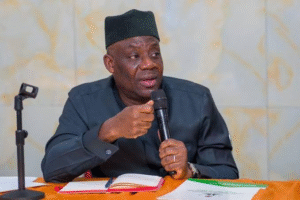 Minister of Education, Dr. Tunji Alausa
Alausa stated that English would henceforth serve as the language of instruction across all levels of education in Nigeria from primary to tertiary institutions.
He explained that evidence-based research conducted by the ministry showed that pupils taught in indigenous languages performed poorly in national examinations and often advanced to higher classes without acquiring essential literacy and numeracy skills.
Read also:Minister of Education Endorses Drug Tests to Curb Student Substance Abuse
“The National Policy on Language has been cancelled. English is now the language of instruction in our schools, from primary to tertiary levels,” he said. “One of the most important elements in education is language, and that’s the foundation we are rebuilding.”
Alausa cited Nigeria’s linguistic diversity as a key challenge in implementing the previous policy.
“The policy allowing the use of mother tongue in early primary education was not uniformly applied. We observed inconsistencies across geopolitical zones, and in many areas, it was never implemented,” he explained.
He added that the review conducted by the ministry revealed that the overuse of mother tongue in instruction contributed to the declining quality of education, with many students completing secondary school unable to perform well in exams such as WAEC, NECO, and JAMB.
“Exams are conducted in English, yet many pupils are taught in languages they barely understand. The mismatch has created confusion and poor outcomes,” the minister added, noting that a unified approach was needed to ensure educational equity nationwide.
Also speaking at the event, the Country Director of the British Council in Nigeria, Donna McGowan, said the conference provided an opportunity for policymakers, educators, and researchers to strengthen English language proficiency and testing in Nigeria.
She noted that the gathering brought together education experts from Africa, South Asia, and the United Kingdom to discuss how language could promote inclusion and improve learning outcomes.
The 2022 National Language Policy was originally introduced to promote indigenous languages and preserve Nigeria’s cultural heritage. However, it faced challenges including the lack of trained teachers, inadequate teaching materials, and Nigeria’s vast linguistic diversity of over 600 languages, 29 of which are already extinct.