Godsent Ogbebor
Trump Blasts UN, Slams Europe, Labels Climate Change a ‘Con Job’ in Fiery United Nations General Assembly Speech
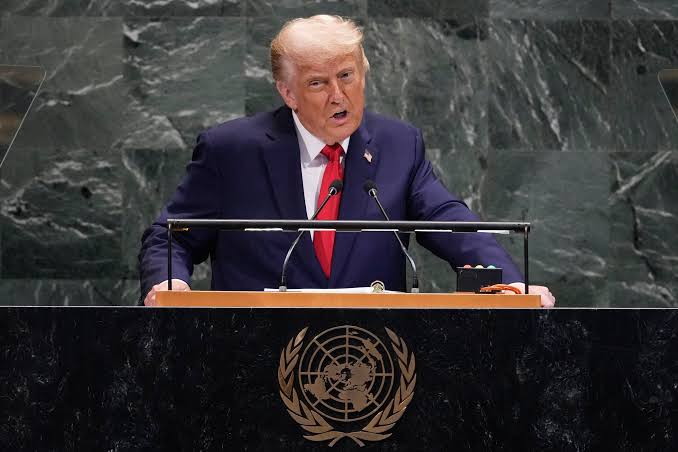
United States President Donald Trump delivered a combative speech at the United Nations General Assembly on Tuesday, accusing the world body of failing to live up to its mission, dismissing climate change as a “con job,” and calling on nations to tighten borders to protect their sovereignty.
Trump, who spoke before world leaders in New York, devoted much of his address to attacking international policies he described as “weak” and “costly.”
He argued that Europe’s embrace of green energy and open-border migration policies had crippled growth and undermined national security. “We must take back control of our economies and our borders. A nation that cannot defend its people cannot call itself sovereign,” he said.
The President also questioned the effectiveness of the UN, claiming it too often settles for “empty words” instead of concrete action. Yet, in a softer moment, he stressed that the United States remains “100% behind” the institution, which he described as having “great potential for peace” if it becomes more accountable.
One of the striking moments of Trump’s speech was his shift in tone on the war in Ukraine. After previously casting doubt on Kyiv’s ability to regain lost territory, he declared that he now believes Ukraine can retake all land seized by Russia with sustained backing from NATO and European allies. The statement drew attention across the hall, as diplomats weighed the implications of his renewed commitment to Europe’s security.
Read also: Trump, Thousands Pay Tribute to Charlie Kirk at Arizona Memorial
Trump reserved his harshest words for climate change policies, calling the phenomenon “the greatest con job ever perpetrated on the world.” He claimed that UN-backed environmental programmes punish industries and working families while offering little benefit to the planet.
He singled out European governments for what he described as “crippling policies” that slow growth and drive up costs, vowing that under his leadership the U.S. would not follow the same path.
The speech also carried Trump’s trademark confrontational style. He mocked technical mishaps in the UN hall, including a malfunctioning teleprompter and escalator, while challenging world leaders to do more to defend religious freedom and free speech.
Reactions to the address were mixed. Supporters hailed it as a bold reaffirmation of U.S. sovereignty and a rejection of “failed globalism,” while critics argued it undermined international cooperation at a time of shared challenges.
Climate advocates accused Trump of spreading misinformation, while migration policy experts warned that his remarks could embolden hardline governments in Europe and beyond.
The broader message of the speech, however, was clear: Trump’s foreign policy remains firmly rooted in his “America First” doctrine. That approach, which prioritises U.S. national interests over multilateral commitments, shaped much of his first presidency and continues to guide his global outlook.
For Trump, “America First” means reworking trade deals, securing borders, keeping military commitments limited, and ensuring that the U.S. does not carry what he considers an unfair share of the global burden.
In pushing this line at the UN, Trump signaled that Washington’s engagement with the world will continue to be transactional, focused on benefits that flow directly to American workers and industries.
While his critics argue this weakens trust among allies and erodes international consensus, Trump insists it is the only way to protect sovereignty, create jobs, and restore pride at home.
As the applause and criticisms echoed through the UN building, the speech underscored Trump’s readiness to confront international institutions head-on while rallying his supporters around the familiar banner of “America First.”